|
|
|
Wholesalers: |

|
/ |
|
|
|
|
|
|
|
|
| There are no shortcuts to any place worth going. - Beverly Sills. |
|
|
|
|
|
|
|
|
|
|
|
|
|
|
|
|
|
|
|
|
|
|
|
|
Sku#:1504
|
|
《In order to view the wholesale price .
Please Apply to be a wholesalers》
|
|
|
|
|
 |
|
Please contact us to verify availability. 1-626-354-6228
Email: zambalallc@gmail.com
America area customers can view on this website first.
https://FlyingMystics.org/ |
|
|
|
|
|
|
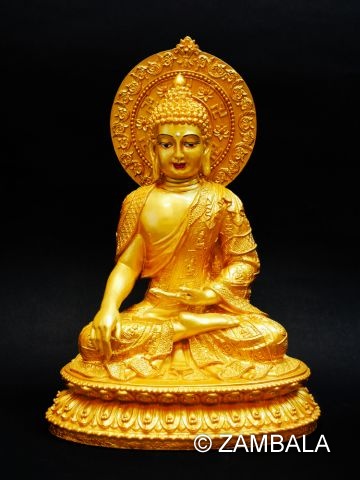
Material: Plastic, Painted, Molded
Size: 9 inches, Approximately 26 cm
Narrative: Siddhartha Gautama, also known as the Buddha (meaning "the Awakened One"), was the founder of Buddhism. He was born around 563 BCE in Lumbini, present-day Nepal, and was a prince of the Shakya clan. His father was King Suddhodana, and his mother was Queen Maya. The life story of Siddhartha Gautama blends historical facts with mythological elements. These legends are primarily recorded in Buddhist scriptures such as the Jataka Tales and the Avatamsaka Sutra, emphasizing his extraordinary birth, his enlightenment, and his redemption of human suffering. These stories are not only religious narratives but also symbolize the universal theme of humanity's pursuit of liberation.
Origin of His Mythological Stories
The story of Siddhartha Gautama originates from the ancient Indian Buddhist tradition, incorporating elements of Indian mythology, Brahmanism, and later evolution in different cultures. These stories, dating back to the reign of King Ashoka in the 3rd century BCE, have been passed down orally and through classical texts. Here is the main outline of their mythological narrative:
- **Birth and Prophecy:** According to legend, Queen Maya dreamt before her pregnancy of a six-tusked white elephant descending from the sky and entering her right side, symbolizing the holiness of the unborn child. This was interpreted as the reincarnation of a Bodhisattva (the future Buddha). At the time of Siddhartha Gautama's birth, extraordinary phenomena occurred: he emerged painlessly from his mother's right side, immediately taking seven steps, each step producing a lotus flower, and proclaiming, "Above and below heaven, I alone am the honored one," foreshadowing his final reincarnation. Prophets predicted that if he remained in the palace, he would become a Chakravartin (universal monarch); if he renounced the world, he would become an enlightened being. To avoid the latter, his father confined him to the palace, where he enjoyed a life of luxury.
- **Renouncing the World and Asceticism:** At the age of 29, Siddhartha Gautama witnessed the "Four Noble Scenes" while traveling: an old man (old age), a sick person (sickness), a corpse (death), and an ascetic monk (renunciation). These visions made him realize the impermanence of life, so in the middle of the night he left the palace, his wife Yashodhara, and his son Rahula, and shaved his head to become a monk. He first studied under two yogis, but was dissatisfied, and instead undertook six years of rigorous asceticism, including fasting until he was skin and bones. However, he found that extreme asceticism did not help him attain enlightenment, so he accepted milk porridge offered by a shepherdess, regained his strength, and chose the "Middle Way" (avoiding extreme pleasures and pains).
- **Enlightenment and Buddhahood**: At the age of 35, he entered into meditation under the Bodhi tree in Bodh Gaya. Mara, the demon king, attempted to tempt and intimidate him, including sending his army and three daughters (greed, anger, and ignorance), but Shakyamuni Buddha overcame them with wisdom, touching the earth as proof, and attained "Perfect Enlightenment." He understood the Four Noble Truths (suffering, its cause, its cessation, and the path to its cessation) and the truth of cause and effect and reincarnation, and was thus revered as the Buddha. This story symbolizes the process of overcoming desires within oneself.
**Preaching and Nirvana:** After enlightenment, he first turned the Wheel of Dharma in Sarnath, imparting teachings to five old friends. For the next 45 years, he traveled throughout northern India, establishing a monastic community and guiding sentient beings. At the age of 80, he entered Nirvana (final liberation) in Kushinagar. His cremation resulted in relics enshrined in stupas throughout the world. These mythological elements later evolved in different Buddhist schools (such as Theravada, Mahayana, and Vajrayana). For example, Mahayana Buddhism emphasizes his bodhisattva practices accumulated over many lifetimes.
These stories are deeply influenced by Indian mythology. For instance, the white elephant, symbolizing purity, originates from the Indian elephant god worship, while the battle under the Bodhi tree with the demon king resembles the trials of heroes in Indian epics. As Buddhism spread, these elements were integrated into local mythologies in China, Japan, and other regions, forming variations such as the Tang Monk's pilgrimage to the West in *Journey to the West*.
Impact on Buddhism
Shakyamuni Buddha is the central figure of Buddhism. His life and teachings laid the foundation for Buddhism, profoundly influencing hundreds of millions of believers worldwide:
- **Foundation of Doctrines:** His Four Noble Truths (the nature of suffering, the cause of suffering, the cessation of suffering, and the path to the cessation of suffering) and the Eightfold Path (right view, right thought, right speech, right action, right livelihood, right effort, right mindfulness, and right concentration) became the core of Buddhist philosophy, emphasizing impermanence, non-self, and Nirvana. These concepts influenced Buddhist ethics, meditation, and the concept of reincarnation.
- **Sectarian Development:** Buddhism expanded from Theravada Buddhism (emphasizing individual liberation) in India to Mahayana Buddhism (emphasizing universal salvation), both centered on Shakyamuni Buddha. His story inspired the formation of branches such as Zen and Pure Land Buddhism. For example, Zen's concept of "seeing one's true nature" originates from his experience under the Bodhi tree.
- **Cultural and Social Impact:** Buddhism spread throughout Asia, influencing art (such as Buddha sculptures), literature (such as Jataka tales), and social norms (such as non-violence and vegetarianism). In modern times, his teachings have been applied to psychology (such as mindfulness meditation) and the global peace movement, and the United Nations has even established Vesak Day to commemorate his birth, enlightenment, and Nirvana.
In short, Siddhartha Gautama is not only a historical figure, but also an eternal symbol of awakening; his myths continue to inspire people to pursue inner peace and wisdom.
|
|
|
 |
|
|
|
|
|
|
|
|
|
|
|
|
|
|
|
|
© 2026 Zambala inc. All Rights Reserved. No part of this site may be reproduced without our written Permission.
Service Mail: ZambalaLLC@gmail.com
Phone: (626) 289-9787 or 1(888)Zambala (926-2252)
Fax: (626) 289-9719
1904 West Valley Blvd. Alahambra, CA 91803 USA
Unless stated otherwise in content's license. Design By
|
|
|