|
|
|
Wholesalers: |

|
/ |
|
|
|
|
|
|
|
|
| "If in our daily life we can smile, if we can be peaceful and happy, not only we, but everyone will profit from it. This is the most basic kind of peace work."
~Thich Nhat Hanh |
|
|
|
|
|
|
|
|
|
|
|
|
|
|
|
|
|
|
|
|
|
|
|
|
Sku#:1956
|
|
《In order to view the wholesale price .
Please Apply to be a wholesalers》
|
|
|
|
|
 |
|
Please contact us to verify availability. 1-626-354-6228
Email: zambalallc@gmail.com
America area customers can view on this website first.
https://FlyingMystics.org/ |
|
|
|
|
|
|
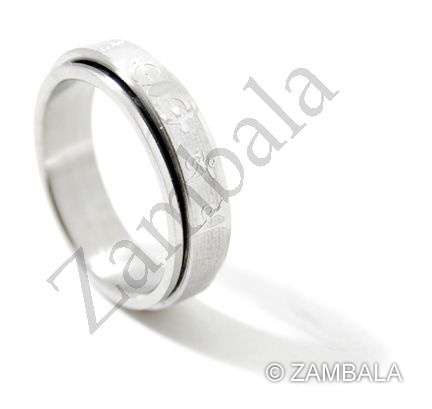
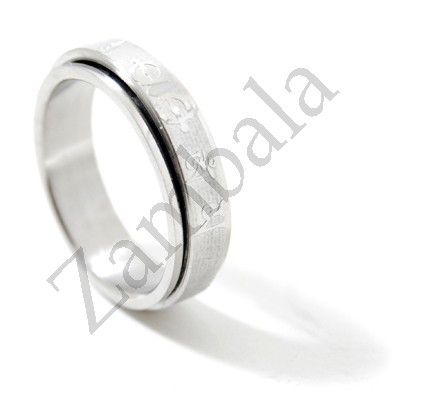
Material: Stainless steel. Double-ring design. Six-syllable mantra
Size: Sizes 5-12 (subject to availability)
Description:
Overview of the Six-syllable Mantra (Om Mani Padme Hum)
The Six-syllable Mantra, also known as the Six-Syllable True Word or Mani Mantra, is in Sanskrit **Oṃ Maṇi Padme Hūṃ**. It is the fundamental mantra of Avalokiteshvara Bodhisattva (referred to as Chenrezi or Guanyin Bodhisattva in Tibetan Buddhism), and is considered the sound manifestation of Avalokiteshvara Bodhisattva's subtle essence and compassionate wisdom. This mantra encompasses the essence of the 84,000 Dharma gates of Buddhism and is revered as the most supreme among all mantras.
Benefits of Reciting the Six-syllable Mantra for Practitioners
The merit of reciting this mantra is immeasurable. Whether recited aloud, silently, or mentally, one can receive the blessings of Avalokiteshvara Bodhisattva. According to Buddhist scriptures (such as the *Mahayana Sutra of the King of Glorious Jewels*) and the teachings of various masters, the main benefits include:
- **Purification of Karmic Obstacles and the Gates of Samsara:** Each recitation purifies the karmic obstacles of the six realms (heaven, asura, human, animal, hungry ghost, and hell being), closing the possibility of rebirth in these realms and avoiding the suffering of samsara. Even merely hearing or touching this mantra can liberate one from karmic burdens.
- **Perfection of the Six Perfections:** The six syllables correspond to the six perfections (generosity, morality, patience, diligence, meditation, and wisdom). Daily recitation embodies the merits of the six perfections, purifying afflictions such as greed, anger, ignorance, pride, jealousy, and stinginess.
- **Increased Wisdom and Longevity:** It severs ignorance, opens wisdom, eliminates calamities, prolongs life, increases wealth and alleviates poverty, and protects against illness, accidents, and disasters. The reciter experiences purification of body and mind, cultivates concentration, enhances focus and compassion, and improves interpersonal relationships. - **Protection and Rebirth in the Pure Land:** With the protection of Avalokiteshvara Bodhisattva and Dharma protectors, reciting or hearing this mantra at the time of death can help one be reborn in the Pure Land of Ultimate Bliss. Even if intestinal worms or other sentient beings come into contact with it, they will be liberated.
- **Inconceivable Merits:** Reciting it once is equivalent to reciting the twelve divisions of the teachings; turning a prayer wheel or writing this mantra doubles the merit. In this degenerate age, this mantra is simple and easy to practice, suitable for all capacities, bringing inner peace, positive energy, and auspiciousness.
Great masters such as Padmasambhava and the Dalai Lama have emphasized that even without deep understanding of its meaning, sincere recitation can bring great benefits, transforming body and mind, and achieving liberation.
**Meaning and Influence in Tibetan Buddhism:**
In Tibetan Buddhism, the six-syllable mantra has profound meaning and widespread influence:
- **Meaning:**
**Om (Oṃ)**: Symbolizes the body, speech, and mind of all Buddhas, purity, and the five wisdoms, purifying the arrogance of the heavenly realms.
- **Ma (Ma):** Symbolizes compassion, purifying the jealousy of the Asura realm.
- **Ni (Ni):** Symbolizes the merits of body, speech, and mind, purifying the greed of the human realm.
- **Padme (Padme):** Padme means "jewel in the lotus," symbolizing the unity of wisdom and compassion (like a lotus rising from mud unsullied), purifying the ignorance of the animal realm and the greed of the hungry ghost realm.
- **Hūṃ (Hūṃ):** Symbolizes immovability and omniscience, purifying the hatred of the hell realm.
The entire mantra signifies "jewel in the lotus," or "transforming impure body, speech, and mind into the pure body, speech, and mind of the Buddha through the unity of compassion (method) and wisdom (emptiness)." It is the voice manifestation of the wisdom and compassion of all Buddhas, a condensed essence of Mahayana Buddhism.
- **Influence:**
This mantra is most widely used in Tibet. Since its vigorous propagation by the Tibetan King Songtsen Gampo in the 7th century, it has become a core practice of Tibetan Buddhism. Tibetans, both monks and laypeople, frequently recite and inscribe mani stones, prayer wheels, and prayer flags, forming a unique cultural landscape (such as mani stones and prayer wheels).
- It is a symbol of the compassionate Avalokiteshvara faith. Tibetan Buddhism regards Avalokiteshvara as the protector of Tibet (the Dalai Lama is considered his incarnation). Reciting this mantra is considered the most essential practice, encompassing the Three Jewels (Buddha, Dharma, Sangha), easy to practice yet encompassing all the virtues of the deity.
- Its influence is far-reaching: not only in personal practice but also in society (such as in prayer and healing), even animals can find liberation upon hearing it. All schools of Tibetan Buddhism (such as Nyingma, Kagyu, and Gelug) regard it as a primary practice, reinforcing compassion and the view of emptiness.
In short, the six-syllable mantra is the crystallization of the compassionate wisdom of Tibetan Buddhism. Reciting it benefits not only oneself but also others, bringing endless blessings and the path to liberation. With sincere practice, Avalokiteshvara will always be by your side.
|
|
|
 |
|
|
|
|
|
|
|
|
|
|
|
|
|
|
|
|
© 2026 Zambala inc. All Rights Reserved. No part of this site may be reproduced without our written Permission.
Service Mail: ZambalaLLC@gmail.com
Phone: (626) 289-9787 or 1(888)Zambala (926-2252)
Fax: (626) 289-9719
1904 West Valley Blvd. Alahambra, CA 91803 USA
Unless stated otherwise in content's license. Design By
|
|
|