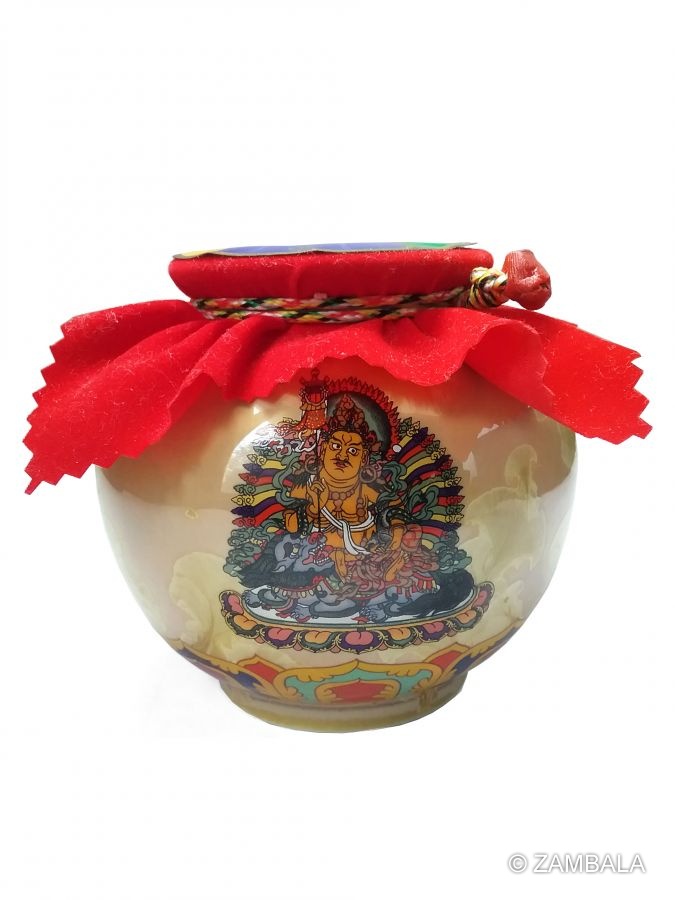
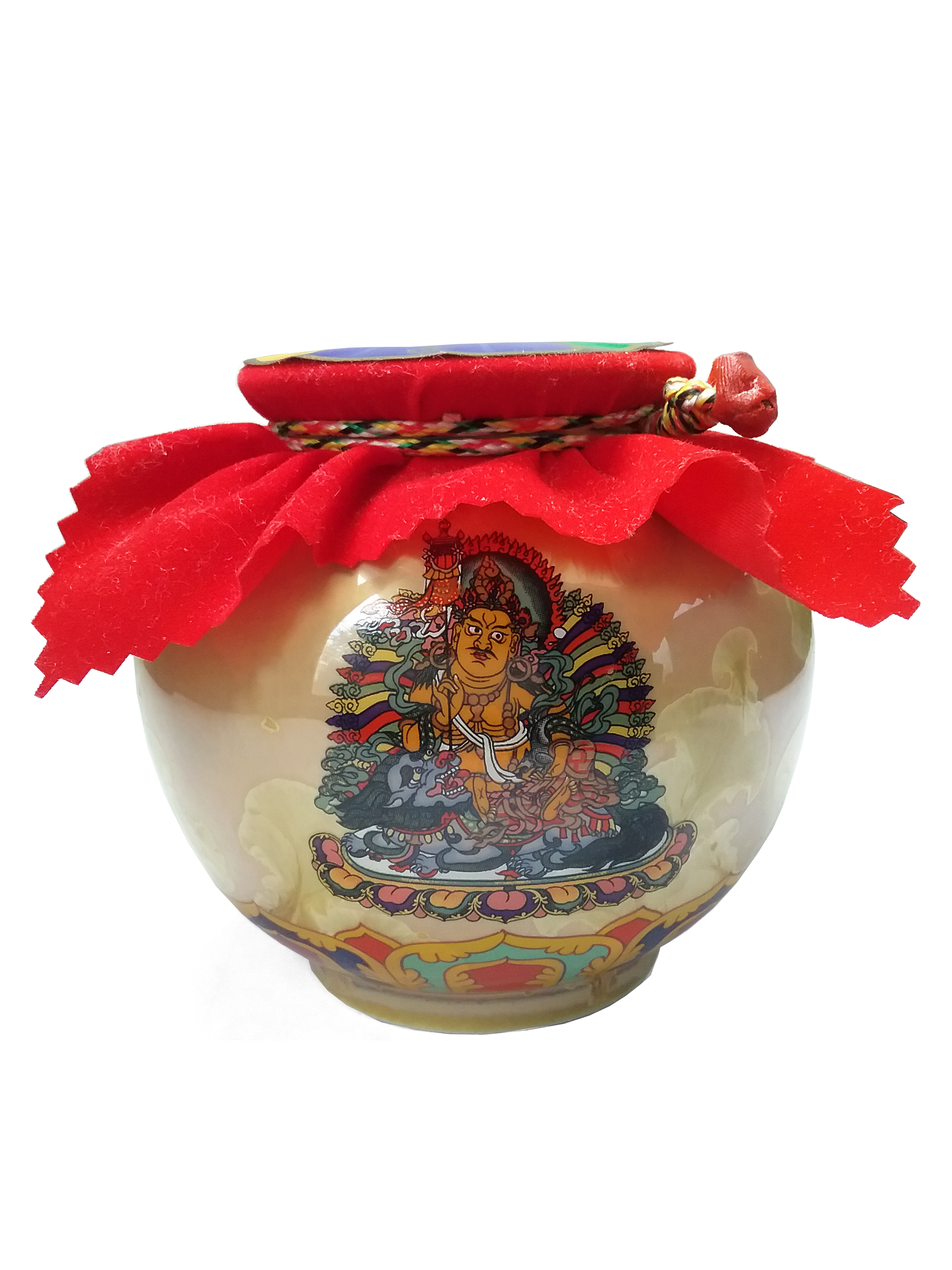
Material: Ceramic (Completed by a professional lama of this association through chanting and consecration)
Dimensions: Maximum diameter approximately 10 cm, height approximately 9.5 cm
Description:
Vaishravana (Tibetan name: Namthong She), also known as the King of Abundance or Vaishravana, is one of the Four Heavenly Kings in Buddhism, guarding the north (north of Mount Sumeru) and commanding the Yakshas. His Sanskrit name, Vaiśravaṇa, means "hearing," named for his virtues being known in all directions and his constant exposure to Buddhist teachings. In Tibetan Buddhism, he is considered an emanation of Ratnasambhava (or Amoghasiddhi) of the south, a transcendental protector deity, and also possesses the attributes of a wealth deity, known as the "God of Wealth in the Human Realm" or the chief of all wealth deities.
His origins can be traced back to Kubera, the Hindu god, originally a protector of wealth. After being absorbed into Buddhism, he became a guardian deity. During the lifetime of Shakyamuni Buddha, Vaishravana vowed to protect the Dharma and bestow wealth and resources upon those who propagate it, enabling them to achieve both worldly and spiritual enlightenment. In Tibetan Buddhism, he has a close relationship with Tsongkhapa, the founder of the Gelug school, and often manifests his power to support monasteries and practitioners (as recorded in biographies).
Regarding the **treasure vase** (Tibetan: gter bum or yang bum, meaning treasure vase or wealth vase), this is a unique ritual implement in Tibetan Buddhism. It is not directly possessed by Vaishravana himself (who typically holds a victory banner and a treasure-spitting mongoose), but rather is an offering associated with the wealth deity system. The treasure vase originates from the prophecy of Padmasambhava, used to restore the balance of the five elements (earth, water, fire, wind, and space), attracting abundance and healing. The vase contains jewels, medicinal herbs, relics, mandalas, mantras, and blessed pills, symbolizing a wish-fulfilling treasury of inexhaustible wealth and merit. In Tibetan Buddhism, there are often special "wealth deity vases" (such as the Yellow Jambhala vase or the Guru Rinpoche wealth deity vase) used to attract wealth, increase blessings, and remove obstacles.
The "Wealth Deity Vase" may refer to a wealth vase associated with the Wealth Deity, or the vase ritual used when offering to the Wealth Deity. Some wealth deity vases use the Yaksha (related to the Wealth Deity) as the basis for a mandala, symbolizing the accumulation of wealth in the Dharma realm.
How to Make Proper Offerings
Offering to the Wealth Deity or related vases emphasizes devotion, purity, and a spirit of generosity:
1. **Offering to the Wealth Deity**:
- Place an image of the Wealth Deity or a thangka on a high place on the altar.
- Offer incense, flowers, lamps, food, and water daily, accompanied by chanting the mantra: the heart mantra "Om Vaiśravaṇāya Svāhā," or praise and supplication.
- The focus is on upholding precepts, purity, and virtuous deeds and generosity (not just material offerings). Scriptures emphasize that observing the Five Precepts, protecting the Three Jewels, and propagating the Dharma for the benefit of all beings will bring their blessings. When seeking wealth, vow to use that wealth for virtuous deeds.
- Tibetan monasteries often hold Wealth Deity ceremonies on specific days (such as the Tibetan calendar's Day of Miracles), registering for blessings and good fortune.
2. **Offering a Treasure Vase** (Wealth Deity Treasure Vase):
- Place it in a high, clean location on the altar (not lower than waist level; it can be covered with a khata (ceremonial scarf) and placed in a wealth corner or a hidden place, such as a safe).
- Regularly offer incense, lamps, water, and fresh flowers, reciting relevant wealth deity mantras (such as the Yellow Jambhala mantra or the Guru Rinpoche mantra).
- After the treasure vase has been blessed by a guru, do not open it. When offering it, regard it as a mandala, and pray for increased merit, wealth, and longevity.
- Multiple treasure vases can be offered simultaneously, placed in different rooms or shrines to enhance the magnetic field and attract abundance.
Offering Principles: Sincerity is key; it should be combined with spiritual practice (such as mantra recitation and almsgiving), not greed. Tibetan Buddhism emphasizes that wealth used for the benefit of others brings lasting blessings.
Meanings and Influence in Tibetan Buddhism
- **Meanings:**
- Vaishravana (the Wealth King) symbolizes merit, wealth, and protective power: his left hand, a mongoose spitting treasure, represents the endless giving of precious gifts to all beings; his right hand, a victory banner, represents subduing obstacles and protecting the Dharma. His golden body and armor symbolize powerful protection and abundance.
- The vase symbolizes a "wish-fulfilling treasury": containing the essence of the five elements and blessed items, it represents the perfection of health, longevity, wealth, and wisdom. It is one of the Eight Auspicious Symbols, symbolizing inexhaustible spiritual and material abundance, healing the environment, and balancing energy.
- **Influence:**
- In Tibetan Buddhism, Vaishravana is a major protector and wealth deity, worshipped in almost every monastery, with far-reaching influence (e.g., supporting the construction of monasteries by Tsongkhapa). He commands the Eight Horse Gods of Wealth and the Five Surname Gods of Wealth, becoming the primary deity for seeking wealth, success, and removing obstacles.
- The vase is widely practiced, used in home and business settings, for land healing, and even buried in mountains and water sources to restore ecological balance. Modern Tibetan Buddhist practitioners often place the vase on their home altars, praying for peace and abundance, reflecting the Tibetan Buddhist concept of wealth as a resource for spiritual practice (merit).
- Overall, it strengthens the "increasing activity" (increasing wealth, lifespan, and happiness) among the four activities of pacifying, increasing, magnetizing, and subjugating in Tibetan Buddhism, helping practitioners accumulate merit and achieve enlightenment.
For in-depth practice, it is recommended to seek the lineage and empowerment of a qualified master to receive genuine blessings.
Note: This item is to be completely dedicated and sealed closed. It should not be opened. If opened, the dedication of the vase is lost, and its magnetic properties are dispelled.