|
|
|
Wholesalers: |

|
/ |
|
|
|
|
|
|
|
|
| "No one saves us but ourselves. No one can and no one may. We ourselves must walk the path." Shakyamuni Buddha (563-483 B.C.) |
|
|
|
|
|
|
|
|
|
|
|
|
|
|
|
|
|
|
|
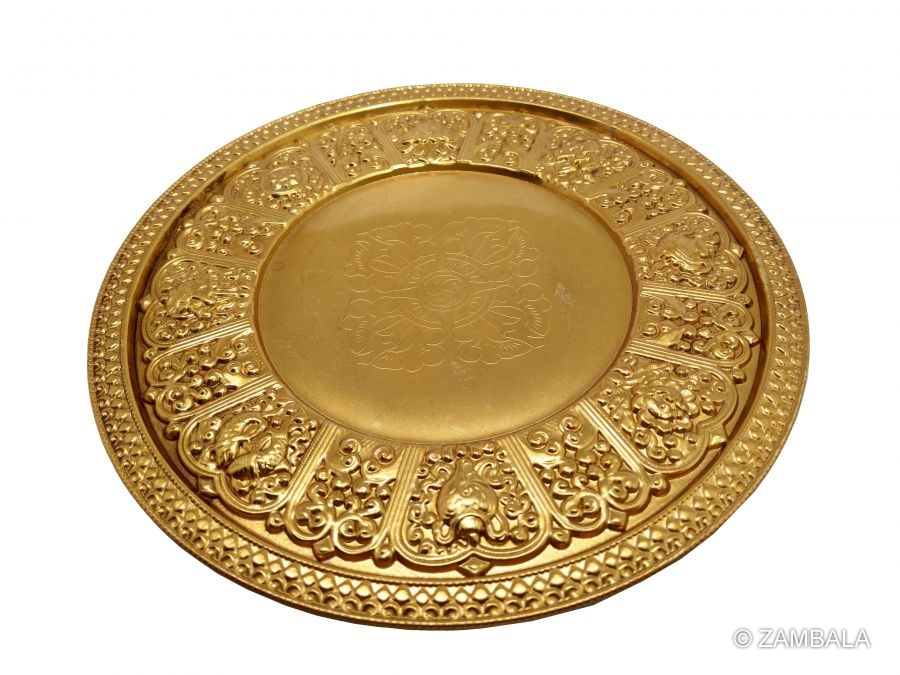
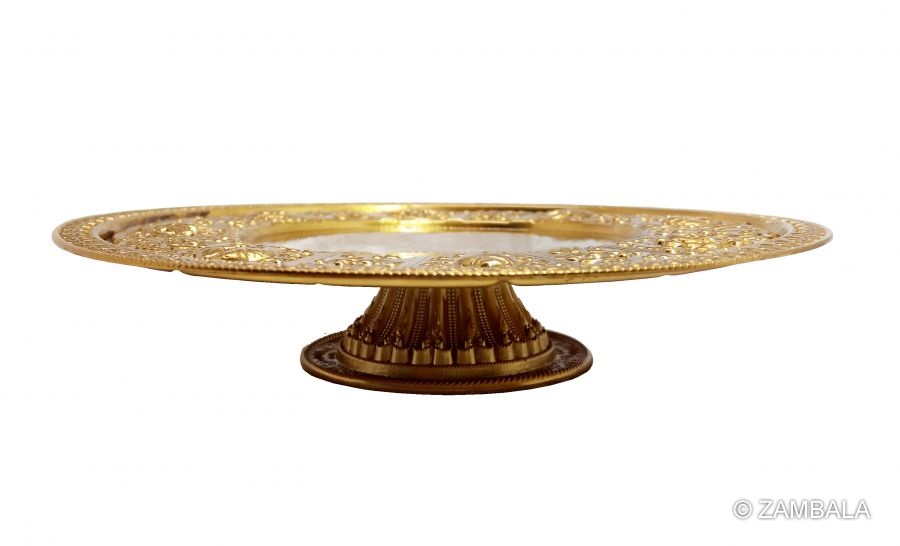
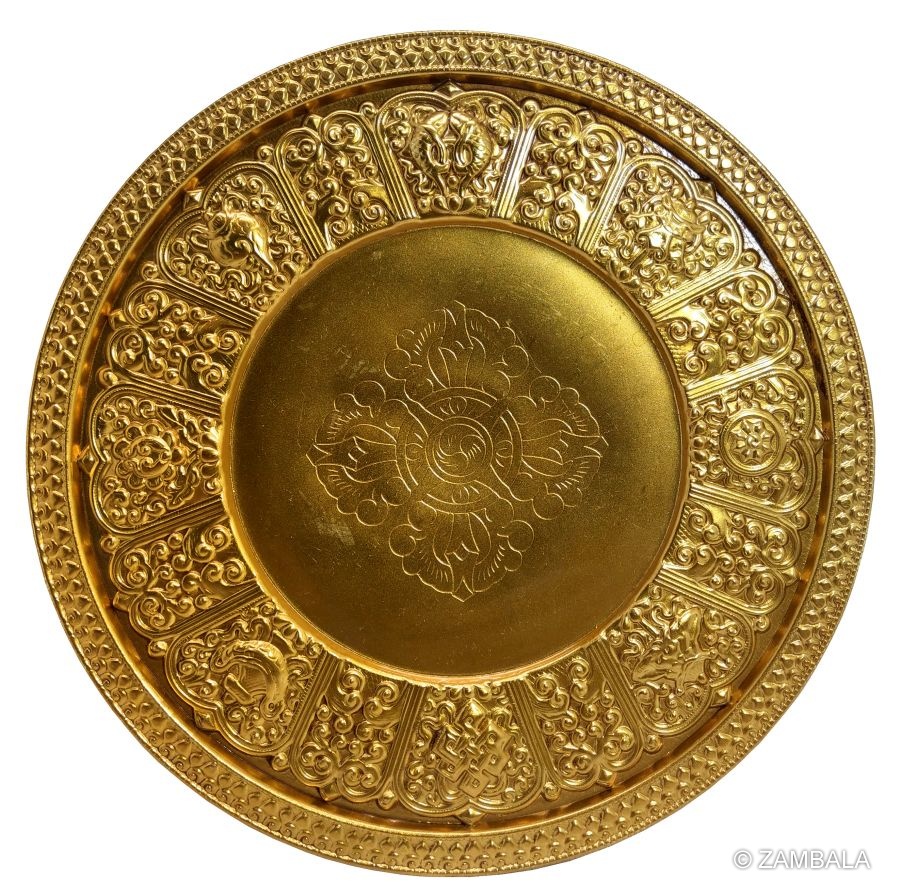
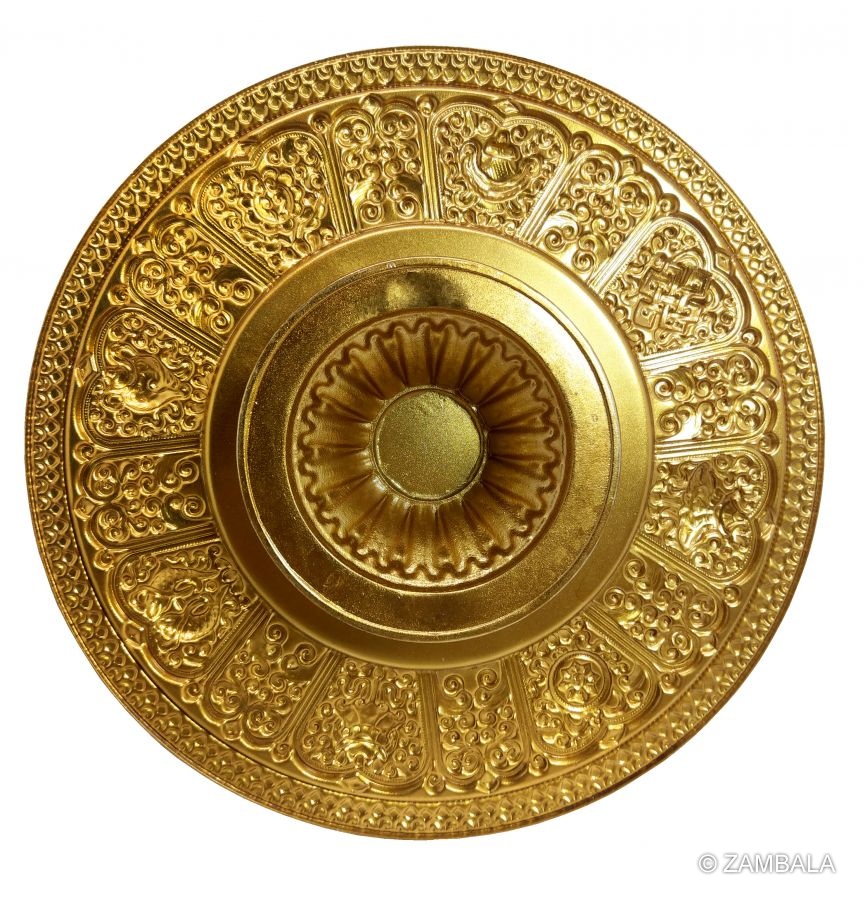
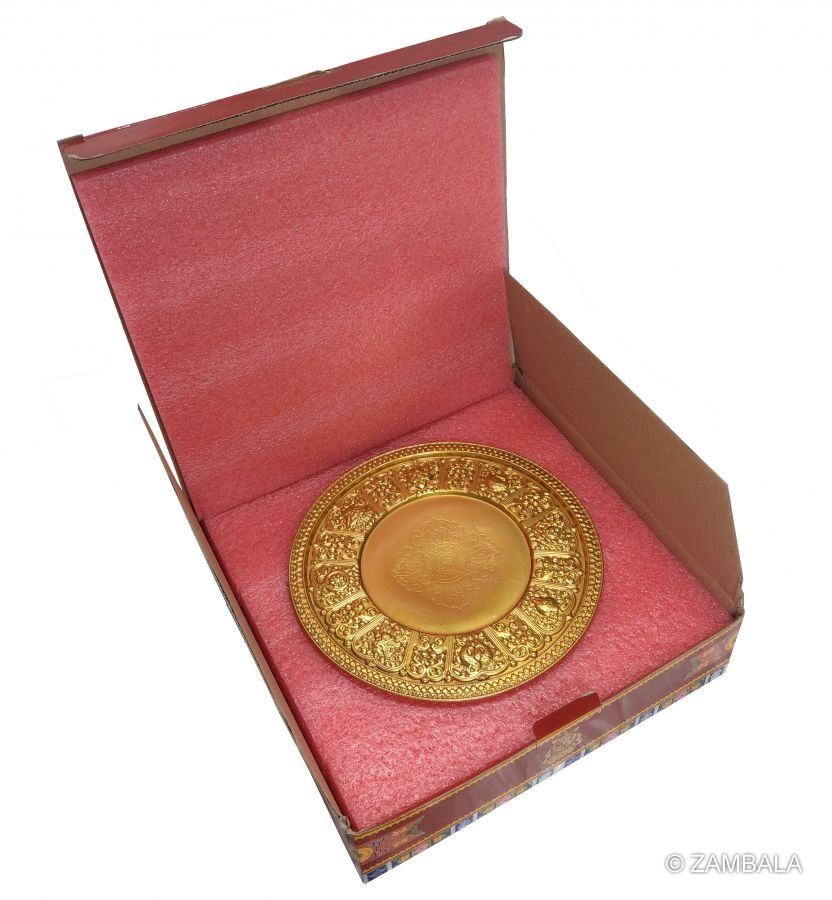
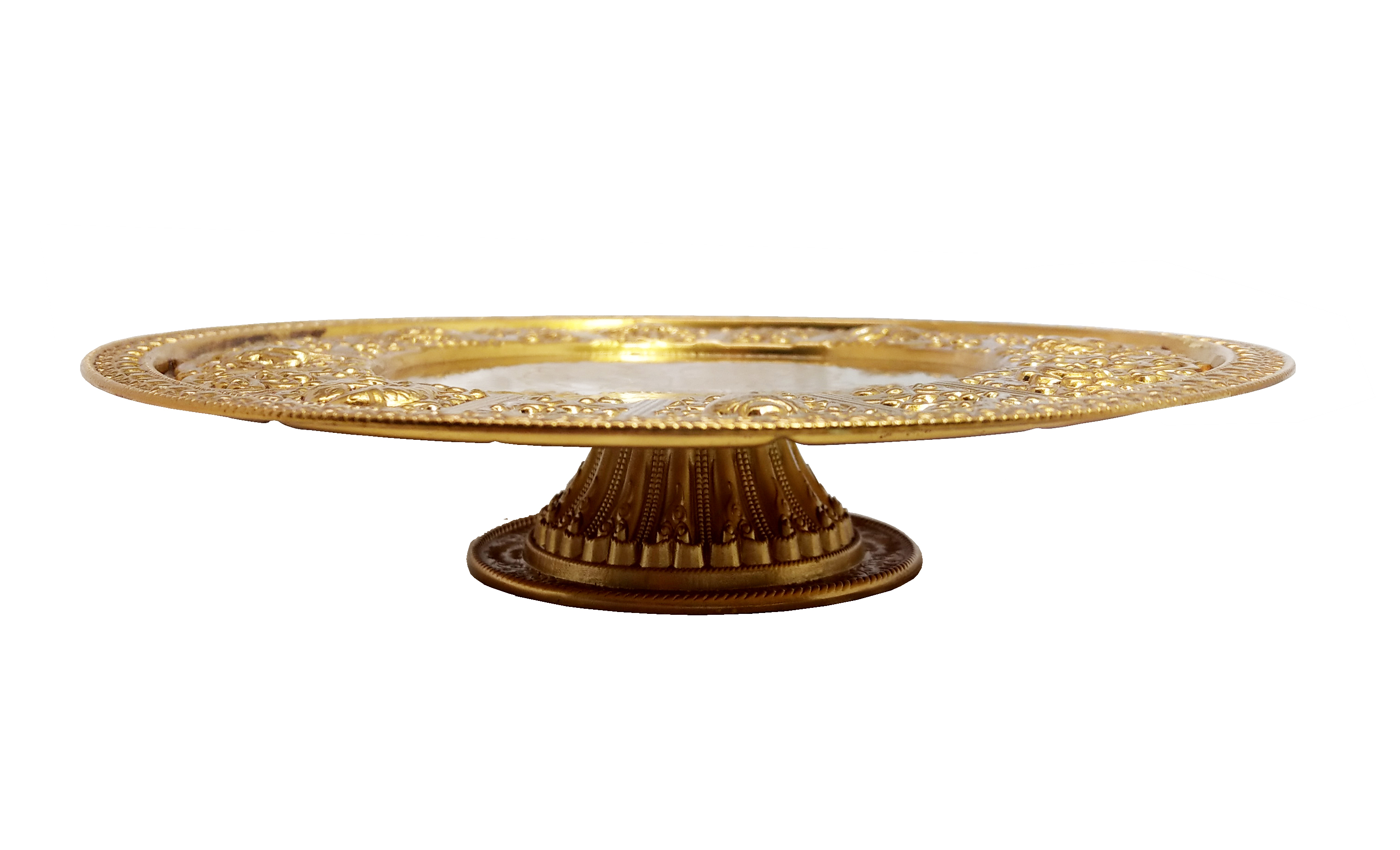
| Offering brass plate, Mandala stand |
|
|
|
| Offering brass plate, Mandala stand |
|
Sku#:3006A
|
|
《In order to view the wholesale price .
Please Apply to be a wholesalers》
|
|
|
|
|
 |
|
Please contact us to verify availability. 1-626-354-6228
Email: zambalallc@gmail.com
America area customers can view on this website first.
https://FlyingMystics.org/ |
|
|
|
|
|
|
Material: Bronze, Gold-plated, Cast (Base sold separately)
Dimensions: 18.5 cm, Height: 3.5 cm
Description: The Mandala Plate is an important offering vessel in Tibetan Buddhism, its origin and story imbued with profound religious significance and cultural background.
**Origin of the Mandala Plate** The name "Mandala Plate" originates from the Sanskrit word "mandala," meaning "altar" or "perfection." Initially, the concept of the mandala originated with Indian Tantric practitioners who used materials such as sand, rice, and flowers to draw mandala patterns on the ground as a foundation and support for their rituals. With the introduction of Tantric Buddhism to Tibet, the form of the mandala plate gradually evolved into a three-dimensional stupa shape, and was made using materials such as metal and jewels to enhance its beauty and solemnity.
**Story of the Mandala Plate** The mandala plate symbolizes the center and edge of the universe, representing elements such as Mount Meru, the four continents, the sun, and the moon. Master Tsongkhapa (1357-1419) initially used stone slabs as mandala offerings. Later, mandala offerings were developed using materials such as gold, silver, and copper, and inlaid with jewels and jade for decoration.
**How to Use a Mandala** A mandala typically consists of multiple layers of stacked boxes and a conch shell top. Each layer is hollow and can be filled with offerings such as gold, silver, gemstones, and grains. During practice, the practitioner recites mantras while scattering offerings into the mandala, stacking it layer by layer to the top, symbolizing wishes for auspiciousness and happiness.
The mandala is not only a tool for offering to Buddhas and Bodhisattvas, but also a way for practitioners to accumulate wisdom and merit. Its use and visualization rituals help practitioners dispel impurities and evil influences, and protect the sacred space within.


|
|
|
 |
|
|
|
|
|
|
|
|
|
|
|
|
|
|
|
|
© 2026 Zambala inc. All Rights Reserved. No part of this site may be reproduced without our written Permission.
Service Mail: ZambalaLLC@gmail.com
Phone: (626) 289-9787 or 1(888)Zambala (926-2252)
Fax: (626) 289-9719
1904 West Valley Blvd. Alahambra, CA 91803 USA
Unless stated otherwise in content's license. Design By
|
|
|