|
|
|
Wholesalers: |

|
/ |
|
|
|
|
|
|
|
|
| "If in our daily life we can smile, if we can be peaceful and happy, not only we, but everyone will profit from it. This is the most basic kind of peace work."
~Thich Nhat Hanh |
|
|
|
|
|
|
|
|
|
|
|
|
|
|
|
|
|
|
|
|
|
|
|
|
Sku#:3132
|
|
《In order to view the wholesale price .
Please Apply to be a wholesalers》
|
|
|
|
|
 |
|
Please contact us to verify availability. 1-626-354-6228
Email: zambalallc@gmail.com
America area customers can view on this website first.
https://FlyingMystics.org/ |
|
|
|
|
|
|
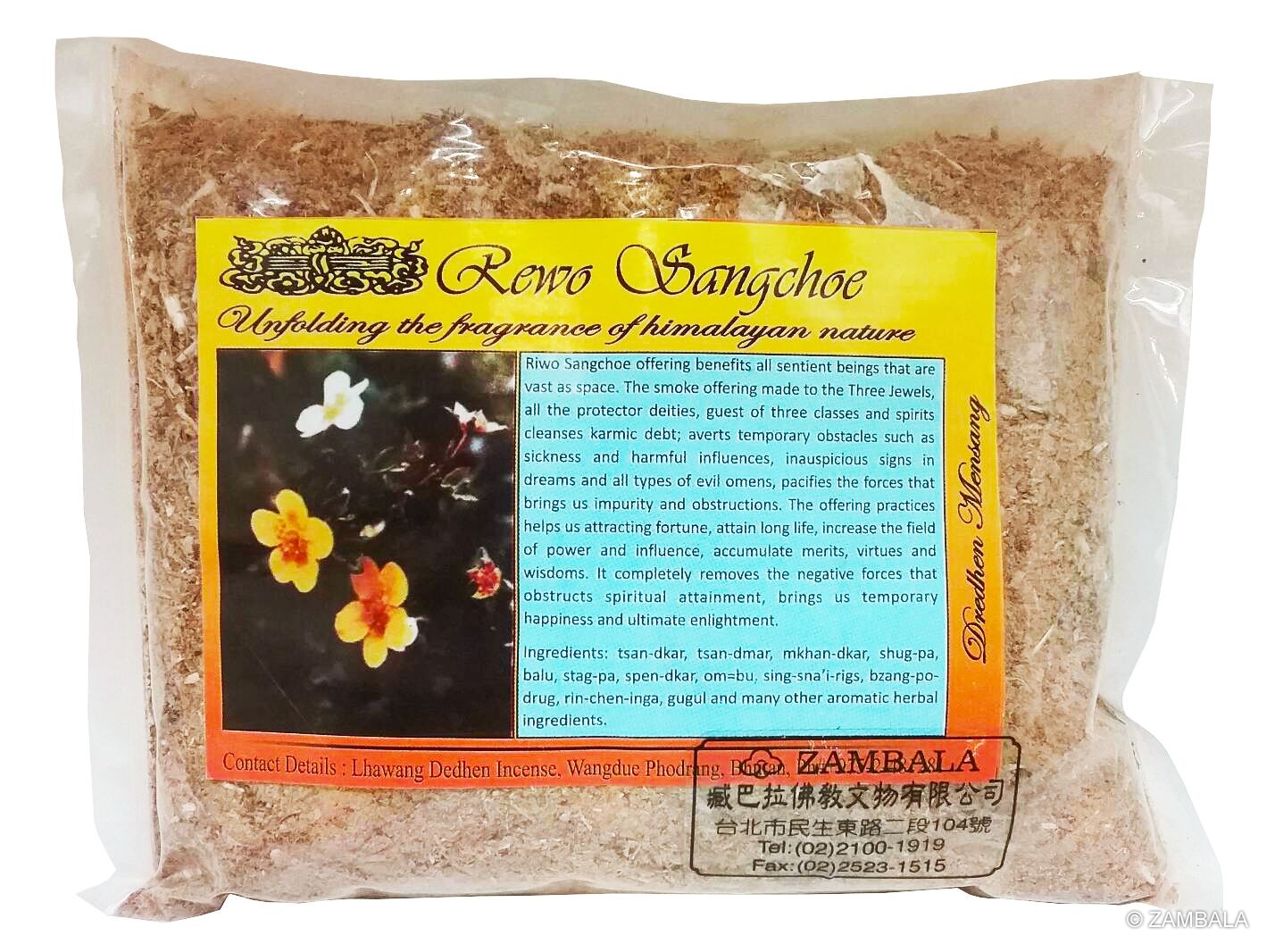
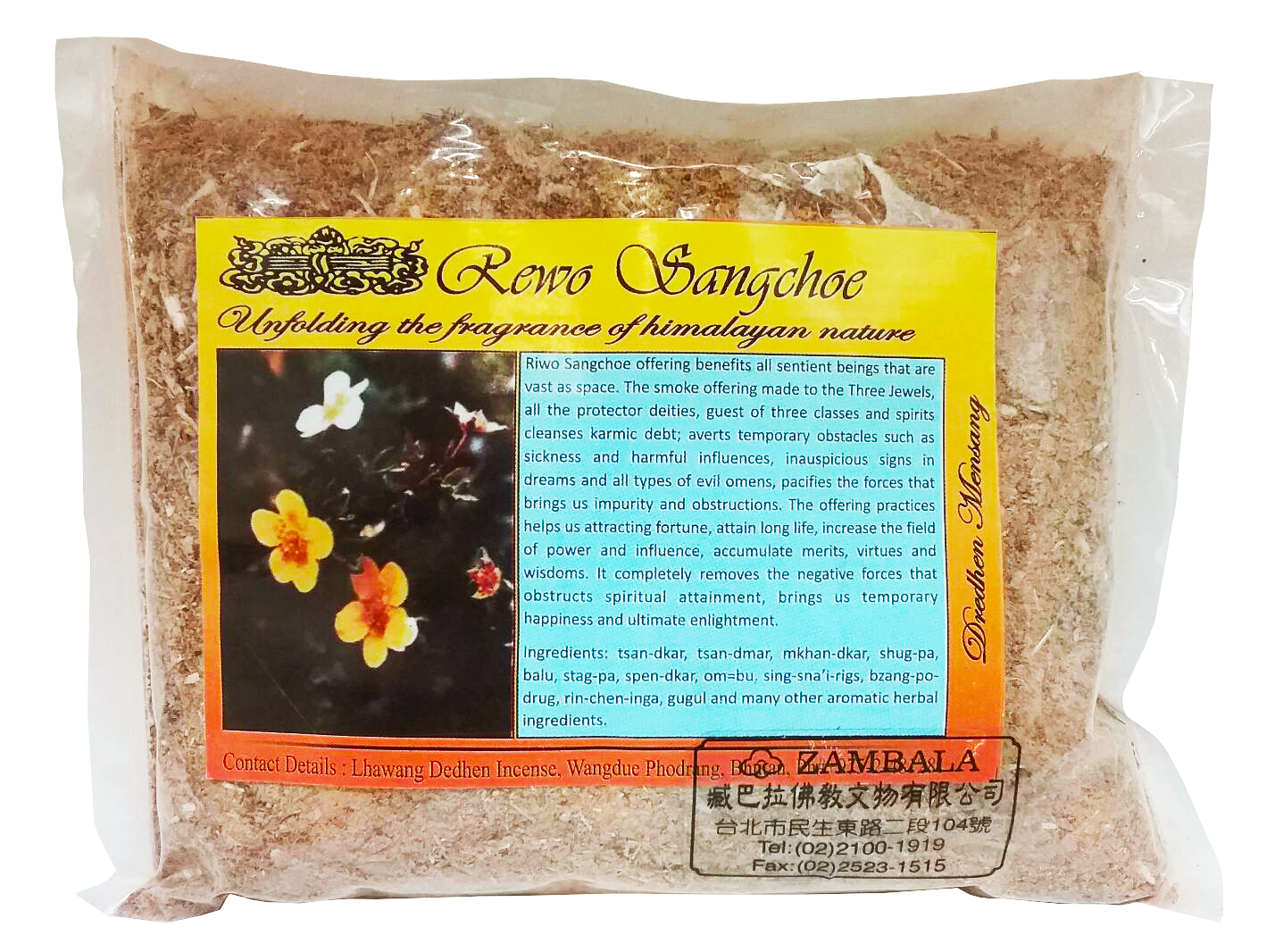
Material: Fragrant woods, herbs, and vanilla. Formulated according to the proper methods by Tsheringma, a top-tier incense manufacturer in Bhutan.
Size: 240 grams
Description: Natural herbal smoke offering powder, suitable for offerings to the Three Jewels, Buddhas, Bodhisattvas, and Dharma protectors. It can also benefit sentient beings and karmic creditors. It helps eliminate negative energy, bringing happiness and even enlightenment.
**Smoke offering powder** (often called **sur** or **sang** in Tibetan) is the core material most commonly used in the "Sang Offering" ritual in Tibetan Buddhism. It is a very common practice in Tibetan Buddhism (especially Nyingma, Kagyu, and Gelug schools), and is particularly suitable for lay practitioners.
The general contents of smoke offering powder: The recipe for smoke offering powder varies depending on the lineage, temple, or master, but traditionally it mostly uses natural plants, herbs, and grains, pursuing "purity, fragrance, and blessings." Common main ingredients include:
- **Aromatic woods**: Cypress branches (most common, especially Himalayan cypress/Juniper), sandalwood (white or red sandalwood), agarwood, pine, etc. → This is the foundation of the smoke offering powder, providing the main smoke and purification power.
- **Herbal and herbal ingredients**: Snow lotus, safflower, cardamom, cloves, licorice, rose, saffron, frankincense, myrrh, rosemary, etc. → Enhancing medicinal power and aroma.
- **Grains and dairy products**: Roasted barley (or barley) flour (tsampa), ghee, dairy product powder (representing the three whites: milk, cheese, and ghee), sugar (the three sweets: rock sugar, honey, and cane sugar) → Providing the substance of "food" offering.
- **Others:** Five grains, five herbs, five spices, five treasures (a small amount of mineral or gemstone powder, such as pearl, coral, agate, etc.), and some specially blessed medicinal powders.
Modern commercial smoke offering powders often pre-grind and mix these materials for convenience, and some may add a small amount of **six-fragrance powder** or nectar ingredients blessed by a specific master. Truly traditional smoke offering powders emphasize "no chemical additives" and are entirely natural.
Usage (Simplified Procedure for Home Practice)
1. **Preparation of Utensils:**
- A heat-resistant smoke offering burner (Sangpur, Tibetan incense burner, preferably made of copper or ceramic; avoid iron as some traditions suggest).
- A small dish (metal or ceramic), a lighter or candle.
- A small amount of rice, biscuits, fruit, sugar, etc., can be offered together.
2. **Lighting Method:**
- Place an appropriate amount of smoke offering powder (one teaspoon to one tablespoon) inside the burner or on a heat-resistant dish.
- Light it with fire (usually start by lighting a small corner with a candle or match, letting it smolder and smoke slowly, rather than burning it out).
- Some people will place a small piece of charcoal first, then sprinkle powder on top to burn.
3. **Combined Practice**:
- After lighting, hold it in your hand or place it in front of you, visualizing the smoke transforming into boundless delicious nectar, filling the void.
- Recite the smoke offering ritual (the most common is "Riwo Sangchod" mountain smoke offering, or a short version of the Avalokiteshvara smoke offering mantra, the Six-Syllable Mantra, etc.).
- Offering to the Buddhas, Bodhisattvas, Yidams, and Dharma Protectors.
- Giving to sentient beings in the six realms (especially the hungry ghost realm, the intermediate state, karmic creditors, and local deities).
- Final dedication: May all sentient beings be free from suffering and attain Buddhahood.
Common times: Practice "Sang" (to purify obstacles) in the early morning, and "Sur" (to give to hungry ghosts) in the evening or at night.
Influence and Significance on Buddhism
The influence of smoke offerings on Tibetan Buddhism is profound, primarily manifested in the following aspects:
1. **A Concrete Practice of Compassionate Giving**
Specifically for beings in the hungry ghost realm and the intermediate state (bardo), who are unable to consume physical food, the aroma of smoke offerings is believed to transform into "nectar" that they can enjoy, alleviating their hunger and thirst. This embodies the core compassion of Mahayana Buddhism's principles of "offering to the higher realms and giving to the lower realms" and "universal salvation."
2. **Purification and Obstacle Removal**
Smoke is considered capable of purifying the mind, body, environment, and energy field, eliminating karmic obstacles, enemies, non-human interference, illness, nightmares, etc. Many Tibetan families and monasteries perform incense offerings (smoke offerings) every morning, making it a fundamental practice in their lives.
3. **Connection with Dharma Protectors and Local Deities**
The origin of smoke offerings is said to be related to Padmasambhava (who used smoke offerings to appease local spirits when building Samye Monastery), thus becoming an important way to establish connections with Dharma protectors, earth deities, mountain gods, and dragon kings.
4. **Modern Influence**
The smoke offering practice is simple and yields quick results, making it very popular in Taiwan, mainland China, and Southeast Asian Han Chinese Buddhist regions. Even those who haven't formally taken refuge can practice it. Many people use it while driving, moving, moving into a new home, for rituals of deliverance, and during Dharma assemblies, making it a bridge between tradition and daily life for modern people.
In summary, although smoke offering powder is merely "material," it embodies the complete spiritual meaning of **compassion, offering, purification, and benefiting all sentient beings**. In Tibetan Buddhism, it is one of the most accessible and powerful daily practices.
|
|
|
 |
|
|
|
|
|
|
|
|
|
|
|
|
|
|
|
|
© 2026 Zambala inc. All Rights Reserved. No part of this site may be reproduced without our written Permission.
Service Mail: ZambalaLLC@gmail.com
Phone: (626) 289-9787 or 1(888)Zambala (926-2252)
Fax: (626) 289-9719
1904 West Valley Blvd. Alahambra, CA 91803 USA
Unless stated otherwise in content's license. Design By
|
|
|