|
|
|
Wholesalers: |

|
/ |
|
|
|
|
|
|
|
|
| "Everything is changeable, everything appears and disappears; there is no blissful peace until one passes beyond the agony of life and death." Shakyamuni Buddha (563-483 B.C.) |
|
|
|
|
|
|
|
|
|
|
|
|
|
|
|
|
|
|
|
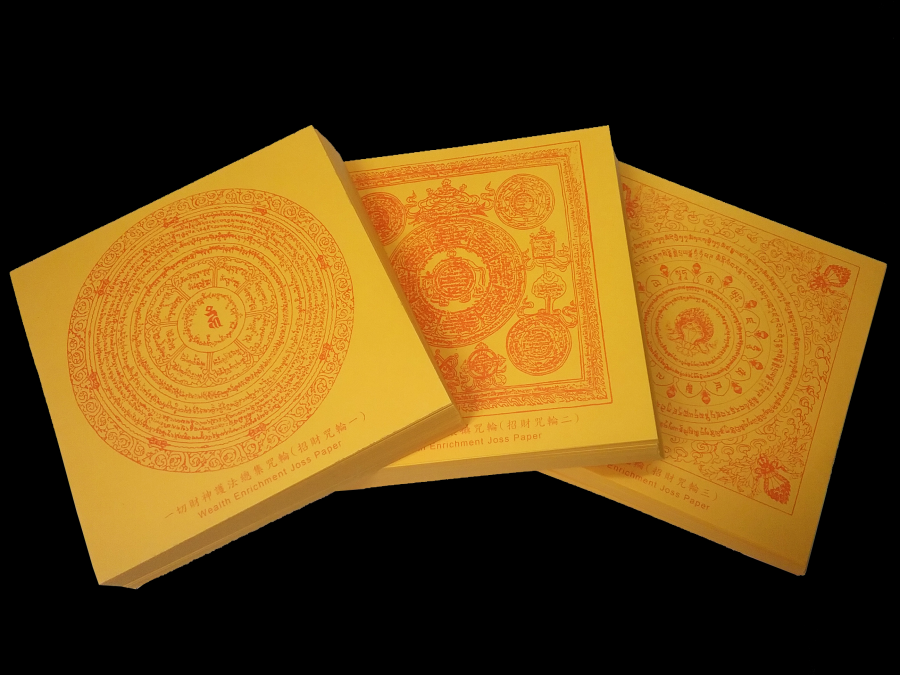
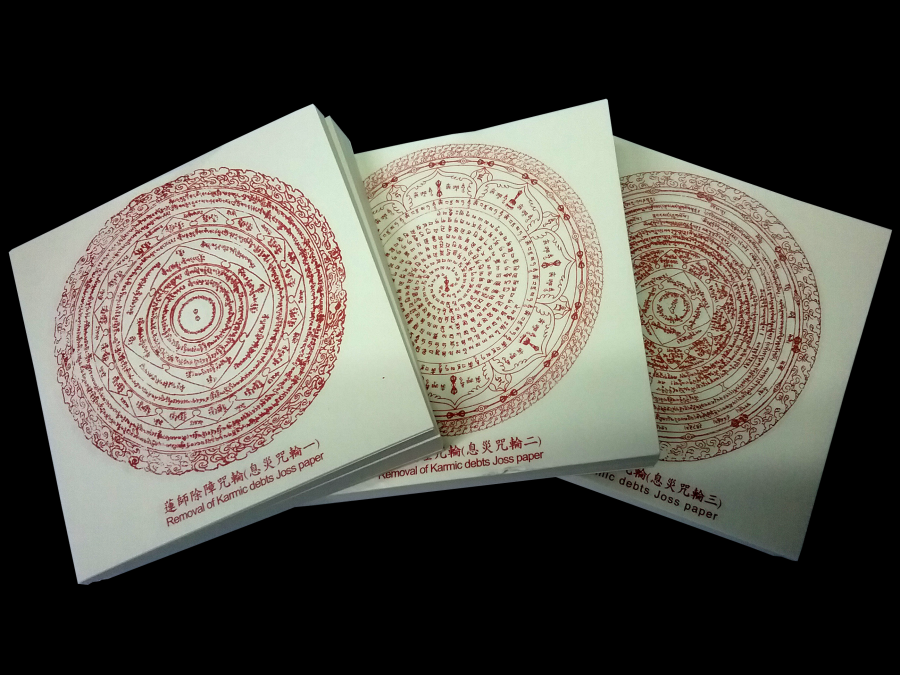
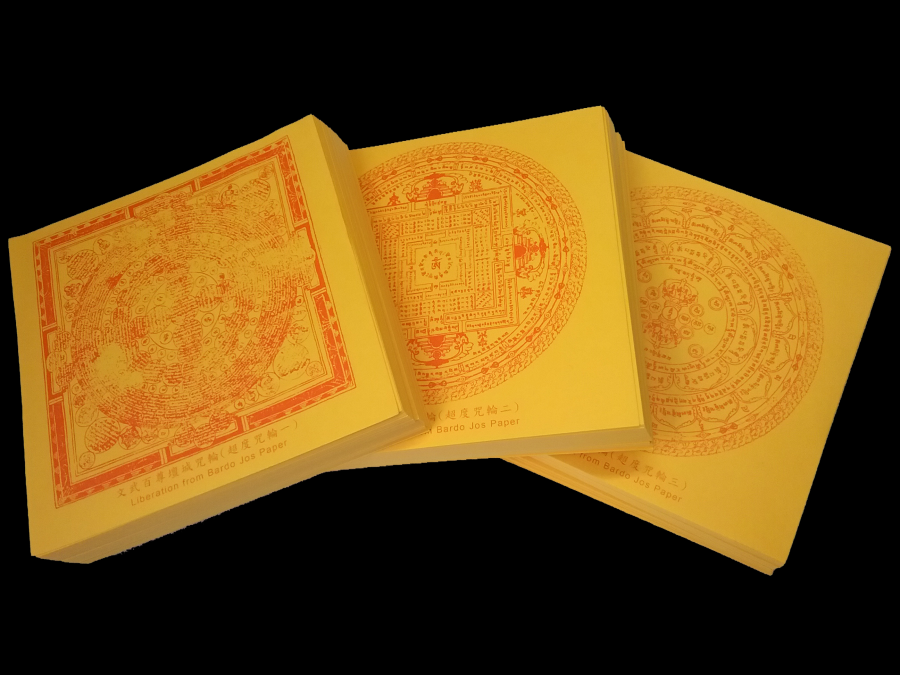
| 4 activities joss paper 8cm*8cm |
|
|
|
|
|
Sku#:3575
|
|
《In order to view the wholesale price .
Please Apply to be a wholesalers》
|
|
|
|
|
 |
|
Please contact us to verify availability. 1-626-354-6228
Email: zambalallc@gmail.com
America area customers can view on this website first.
https://FlyingMystics.org/ |
|
|
|
|
|
|
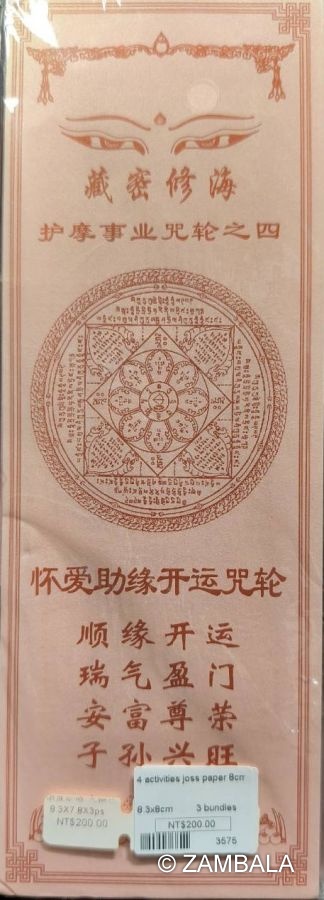
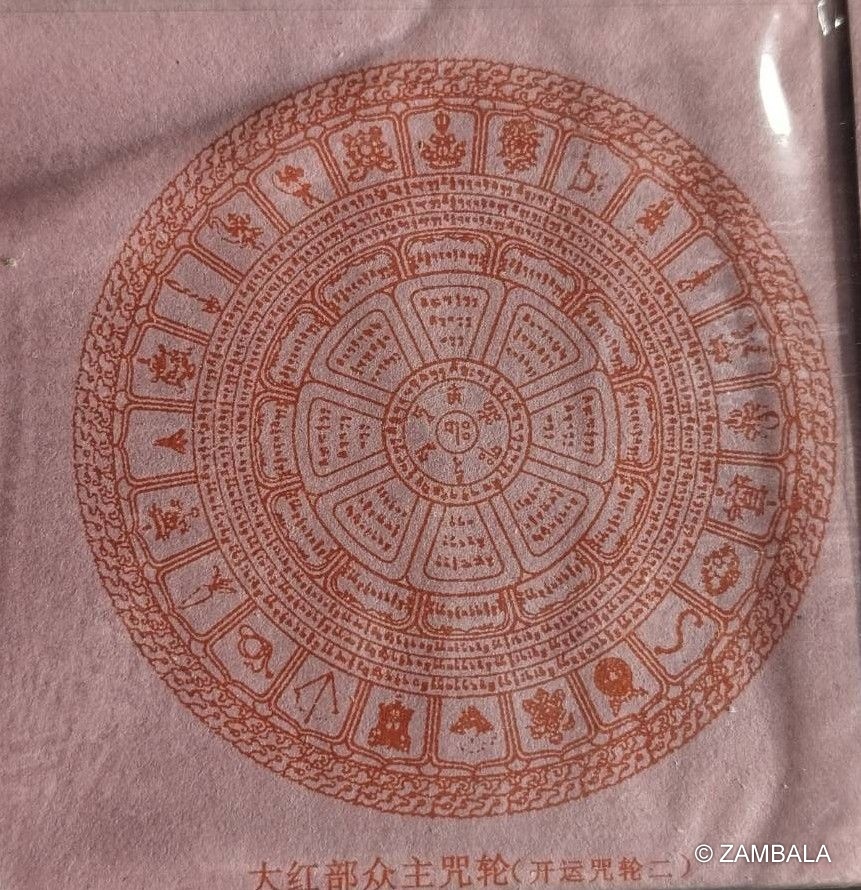
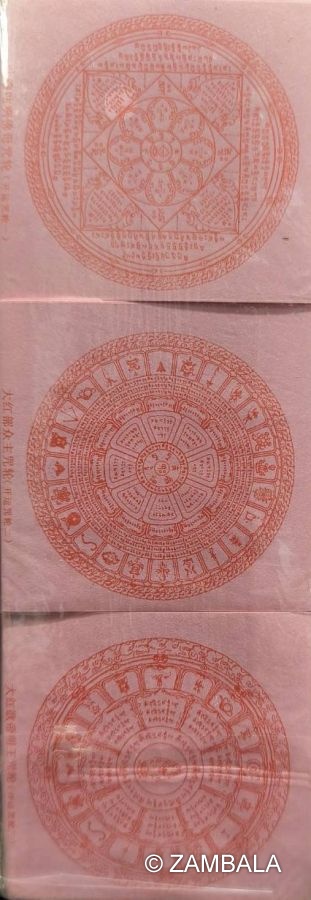
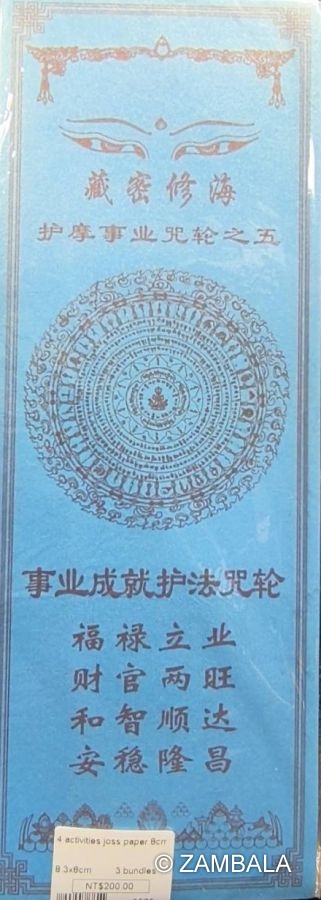
Material: Mantra paper, printed, runes
Size: 300 sheets / 8 x 8 cm each, four types in total
Description:
(Instructions and usage included)
Wealth-Attracting, Blessing, and Wish-Fulfilling Mantra Wheel
Love-Attracting, Auspicious, and Good Fortune Mantra Wheel
Business Success and Dharma Protection Mantra Wheel
Karma-Cleansing, Disaster-Pacifying, and Obstacle-Removing Mantra Wheel
Bardo Liberation and Salvation Mantra Wheel
"Pacifying, Increasing, Attracting, and Destroying" (full name "Pacifying, Increasing, Attracting, and Destroying") is one of the most important categories of practices in Esoteric Buddhism (especially Tibetan Buddhism and the Shingon and Shingon schools of Chinese Buddhism), also known as the "Four Activities" or "Four Karmas." It originates from the late Indian Tantras, especially the Highest Yoga Tantra system, and describes four ways in which practitioners utilize the compassion and power of Buddhas and Bodhisattvas to achieve their goals according to the needs of different beings and their objectives.
I. Content and Meaning of Pacifying, Increasing, Magnetizing, and Subduing
| Activity Name | Sanskrit Equivalent | Chinese Meaning | Main Purpose and Target | Representative Deity and Hand Seals/Mantra Characteristics |
|----------|----------------|--------------|------------------------------------------|------------------------------------------|
| **Pacifying** | Śānta (Extinguish) | Pacifying Disasters | Eliminating Disasters, Diseases, Misfortunes, Wars, Negative Karma, etc. | Often represented by white deities, such as White Tara, Medicine Buddha, and Avalokiteshvara; hand seals are often the "Abhaya Mudra" or "Varada Mudra" |
| **Increasing** | Puṣṭi (Growth) | Increase | Increasing lifespan, merit, wisdom, wealth, power, etc. | Often represented by yellow deities, such as Yellow Jambhala, Vaishravana, and Vajrapani; hand seals are often the "Varada Mudra" |
| **Magnifying** | Vaśya (Attract) | Magnetizing/Loving/Attracting | Inspiring others to respect and love, taming hearts, harmonizing relationships, and ensuring smooth endeavors | Often depicted as red deities, such as Red Tara, Kumantaka, and Aizen Myōō; frequently carrying hooks (symbolizing invocation) |
| **Subjugation** | Māraṇa / Abhicāra (fierce) | Destroying/subduing/annihilating | Subduing intensely evil beings, eliminating demons, and eradicating serious obstacles (last resort) | Often depicted as blue or black deities, such as Yamantaka, Acala, and Hayagriva; extremely wrathful in appearance, with many legs, faces, and arms |
These four activities are essentially born from the great compassion of the Bodhisattva, differing only in their "expedient means":
- The first three (pacifying, increasing, and magnetizing) belong to the "compassionate aspect,"
- Subjugation belongs to the "fierce aspect," but is still a manifestation of the "Womb of Great Compassion," with the purpose of protecting the Dharma and saving sentient beings.
II. Origins and Classical Basis
1. **Indian Tantric Stage (7th-12th Centuries)**
Originating from fundamental tantras such as the *Mahavairocana Sutra* and the *Vajrasekhara Sutra*, the rudiments of the four activities (practices) already appeared.
By the time of the Highest Yoga Tantras (such as the *Hevajra Tantra*, *Kalachakra Tantra*, and *Yamantaka Tantra*), the system of the four activities was fully mature.
2. **Systematization of Tibetan Buddhism**
The Nyingma, Sakya, Kagyu, and Gelug schools all fully inherited this system.
In particular, the Nyingma school integrated the practices of pacifying, increasing, magnetizing, and subjugating into the "Eight Great Practices" (the Eight Great Herukas), with each deity corresponding to a different principal activity.
Master Tsongkhapa, in his *Lamrim Chenmo* (Great Treatise on the Stages of the Path of Tantra), details the order of practice and precepts of the four activities.
3. **Han Chinese Esoteric Buddhism (Tangmi, Dongmi)**
Transmitted to Japan by Master Kukai from Acharya Huiguo of Qinglong Temple, Dongmi (Eastern Esoteric Buddhism) developed the "Four Preliminary Practices" (pacifying, increasing, loving-kindness, and subjugating the three worlds).
Although Tangmi was interrupted in China, the lineage of "pacifying, increasing, attracting, and subjugating" is still preserved in the arrangement and rituals of the Garbhadhatu and Vajradhatu mandalas.
III. Profound Influence on Buddhism
1. **Practical Aspect: Shifting Buddhism from "Renouncing the World" to "Entering the World and Benefiting Others"**
Traditional exoteric Buddhism emphasizes individual liberation. Esoteric Buddhism's "Four Practices" allow practitioners to directly intervene in worldly affairs (healing, averting disasters, and subduing evil people), significantly increasing Buddhism's influence among the people, especially in Tibet and Japan.
2. **Deification and the Development of Deity Yoga**
Each activity corresponds to a different deity with different colors, forms, mudras, and seed syllables, leading to the development of an extremely elaborate system of deities in Tibetan Buddhism and providing concrete methods for practicing the theory of "attaining Buddhahood in this very life."
3. **Controversy and Vinaya Issues**
"Wrathful practices" are most easily abused; therefore, all orthodox lineages stipulate:
- Must possess the Bodhisattva vows;
Must have extremely high realization;
Must have their motives strictly examined by a guru;
- Can only be used against "three extremely malevolent beings" (those who slander the Dharma, those who destroy the true Dharma, and those who endanger the lifeline of Buddhism).
Historically, there have indeed been cases of the abuse of wrathful practices (such as some religious and political conflicts in Tibet), leading many later masters (such as the 14th Dalai Lama) to publicly restrict or prohibit the general public from practicing wrathful practices.
4. **Cultural and Artistic Influences**
The colors and postures of Thangka paintings, Buddha statues, and mandalas are almost entirely designed based on the four activities of pacifying, increasing, magnetizing, and subjugating, becoming the most important iconographic basis for Tibetan Buddhist art.
Summary
The four activities of pacifying, increasing, magnetizing, and subjugating are a typical system in Vajrayana Buddhism that transforms "compassion" and "wisdom" into concrete practical abilities. It makes Buddhism not only a philosophy and meditation, but also an "applied religion" that can directly alleviate the suffering of sentient beings. Although the "subjugating" activities are the most controversial, the orthodox tradition always emphasizes that the four activities are all different aspects of "compassion," and none of them are practiced for personal gain or hatred. Truly accomplished masters who have realized "emptiness" have no anger in their hearts when performing subjugating activities, only pure compassion—this is also the ultimate doctrine of Vajrayana.
|
|
|
 |
|
|
|
|
|
|
|
|
|
|
|
|
|
|
|
|
© 2026 Zambala inc. All Rights Reserved. No part of this site may be reproduced without our written Permission.
Service Mail: ZambalaLLC@gmail.com
Phone: (626) 289-9787 or 1(888)Zambala (926-2252)
Fax: (626) 289-9719
1904 West Valley Blvd. Alahambra, CA 91803 USA
Unless stated otherwise in content's license. Design By
|
|
|