|
|
|
Wholesalers: |

|
/ |
|
|
|
|
|
|
|
|
| "Believe nothing, no matter where you read it, or who said it, no matter if I have said it, unless it agrees with your own reason and your own common sense." Shakyamuni Buddha ( 563-483 B.C.) |
|
|
|
|
|
|
|
|
|
|
|
|
|
|
|
|
|
|
|
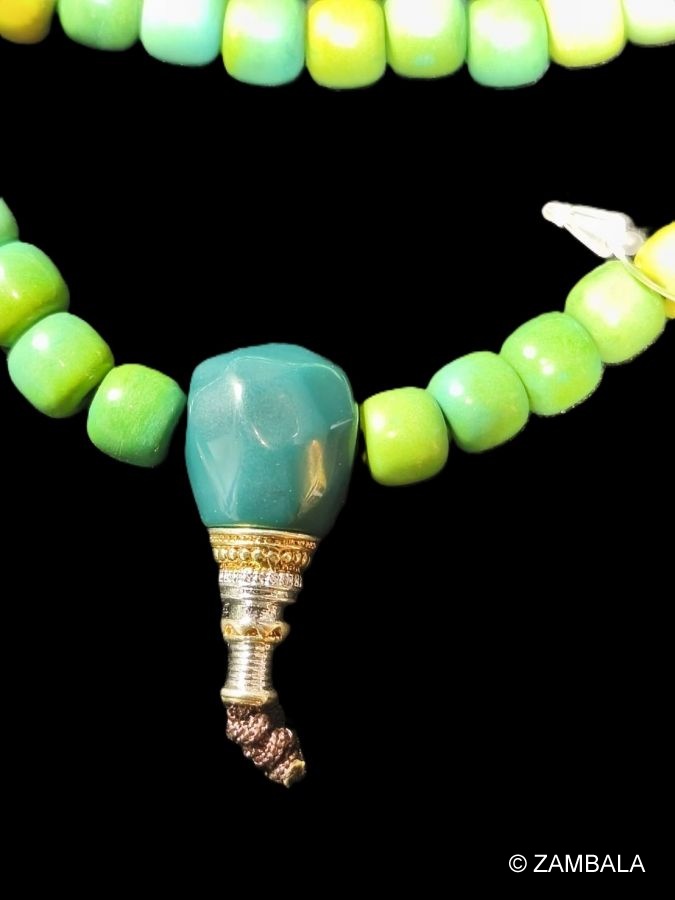
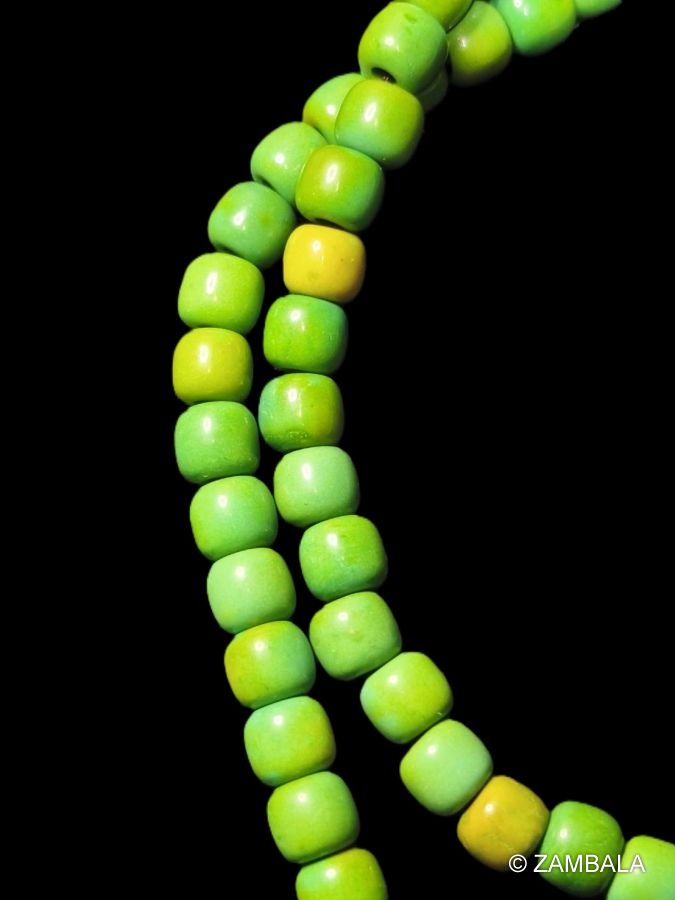
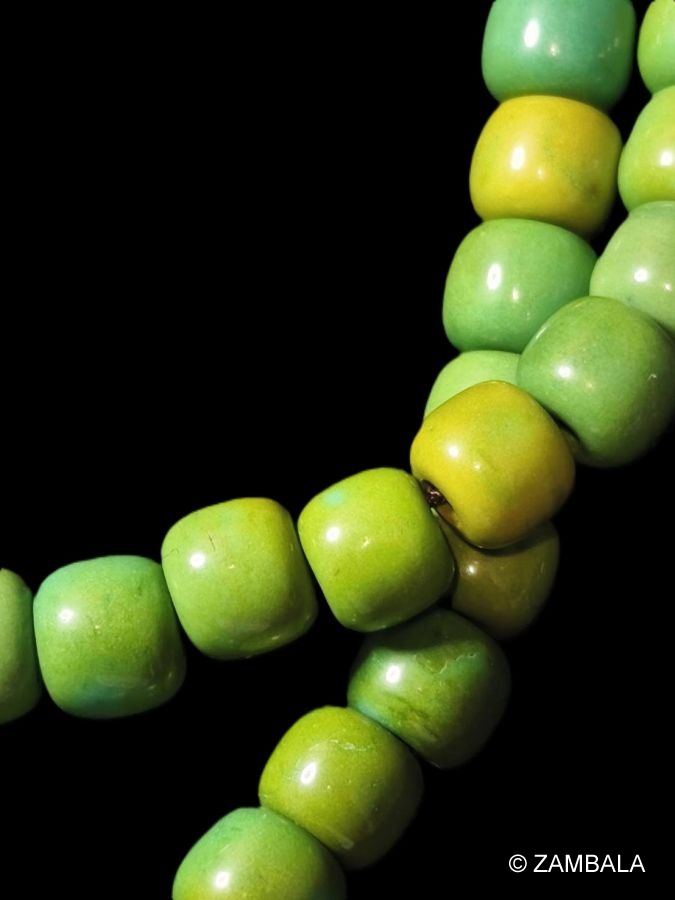
| Antique Turquoise mala 8mm |
|
|
|
|
|
Sku#:1211-1
|
|
|
Wholesale price |
US |
XXX.XX |
|
《In order to view the wholesale price .
Please Apply to be a wholesalers》
|
|
|
|
|
 |
|
Please contact us to verify availability. 1-626-354-6228
Email: zambalallc@gmail.com
America area customers can view on this website first.
https://FlyingMystics.org/ |
|
|
|
|
|
|
Material: Old turquoise.
Size: 6mm / 108 beads
Description: The origin of old turquoise prayer beads
Turquoise is one of the oldest gemstones in the world, and it is especially valued in Tibetan Buddhism (Vajrayana). "Old turquoise" typically refers to turquoise beads that were mined decades or even centuries ago, and have developed a warm patina and a deeper, more stable color after long-term handling or veneration. This type of turquoise is mainly produced in:
- Nakdong and Zayu in Tibet (historically the most famous mines in Tibet, now depleted)
- Nishapur in Iran (an old Persian mine, known as "Feroza")
- Zhushan in Hubei and Baihe in Shaanxi, China (newer mines)
In Tibetan Buddhism, turquoise is considered the most sacred object, "besides dzi beads," closest to a stone fallen from heaven, symbolizing the "union of heaven (blue-green) and earth (brown iron lines)," representing the fusion of sky and earth, hence the name "Stone of Heaven." There is a Tibetan proverb: "Better to lose gold than turquoise," highlighting its importance.
The most famous legend about "old turquoise rosaries" comes from Padmasambhava (the founder of the Nyingma school of Tibetan Buddhism). It is said that when Padmasambhava entered Tibet to spread Buddhism, he used turquoise rosaries to suppress demons and blessed many turquoise stones, giving them extremely strong power. Many eminent monks and masters (such as the Fifth Dalai Lama, the Eighth Karmapa, and the successive Karmapas of the Situ lineage) have used or blessed old turquoise prayer beads. These beads, passed down through generations, are known as "old mine, old beads" and are extremely precious.
Usage
The most common type of old turquoise prayer beads is the standard Tibetan prayer bead with 108 main beads (Tibetan: ཕྲེང་བ, pronounced trengwa). Its usage is the same as other Tibetan Buddhist prayer beads, but due to the precious material, there are often special considerations:
1. **For Mantra Recitation**
- Especially suitable for practicing the mantras of Green Tara, Manjushri, Wealth Tantra, and Akshobhya (these deities are often associated with turquoise).
- Many Tibetan practitioners believe that reciting "Om Mani Padme Hum" or the Green Tara mantra with old turquoise prayer beads brings particularly great merit.
2. **Playing with and Offering to the Beads**
- Old turquoise prayer beads must be frequently handled with the warmth of one's body (a process Tibetans call "playing with them to activate them") to develop a reddish-brown patina; only then are they considered truly "living beads."
- They should not be touched by just anyone, especially people of the opposite sex or those with impure energy, otherwise they will become "dead beads" (losing their spirituality and luster).
3. **Blessing Ritual**
- Newly acquired old turquoise prayer beads are usually blessed by a Living Buddha or Guru through "consecration" or "enshrinement." Some beads may also contain relics or mantras.
- Some old beads themselves come from the relics of high-ranking monks or are passed down from monasteries, already possessing extremely strong blessings.
Profound Influence on Buddhism
1. **Symbolic and Belief Aspects**
- Turquoise is considered an embodiment of "Chakrasamvara" and "Green Tara," representing compassion and success in endeavors.
1. **2. **Historical Role in Supporting Buddhism**
**2. **Many important lineage transmissions are associated with turquoise rosaries.** For example:**
**In the Kagyu school's "Six Yogas of Naropa" lineage, many masters used turquoise rosaries to transmit teachings.**
**In the Nyingma school's Dzogchen teachings, turquoise is often used as an aid in "Tummo meditation."**
**During the turbulent 20th century in Tibet, many high lamas fled to India carrying old turquoise rosaries, which became important symbols of the continuation of the lineage.**
**3. **Contemporary Influence**
**Even today, in Lhasa's Barkhor Street, Jokhang Temple, and Potala Palace, one can still see Tibetans queuing to have old turquoise rosaries touched on their heads by lamas for blessings.** Many practitioners of Tibetan Buddhism in Han Chinese areas regard the "old mine turquoise 108-bead rosary" as one of the most important ritual implements in their lives, even surpassing it in importance compared to rosaries made of sandalwood or bodhi seeds.
In summary, the "old turquoise rosary" in Tibetan Buddhism is not only a tool for counting mantras, but also considered a vessel for the blessings of deities, a sacred object protected by Dharma protectors, and a testament to the lineage of Dharma. Its preciousness lies in the fact that it carries the blessings of eminent monks and masters for hundreds or even thousands of years, as well as the spiritual effort and faith of countless practitioners; it is a "living lineage."
|
|
|
 |
|
|
|
|
|
|
|
|
|
|
|
|
|
|
|
|
© 2026 Zambala inc. All Rights Reserved. No part of this site may be reproduced without our written Permission.
Service Mail: ZambalaLLC@gmail.com
Phone: (626) 289-9787 or 1(888)Zambala (926-2252)
Fax: (626) 289-9719
1904 West Valley Blvd. Alahambra, CA 91803 USA
Unless stated otherwise in content's license. Design By
|
|
|