|
|
|
Wholesalers: |

|
/ |
|
|
|
|
|
|
|
|
| "People have a hard time letting go of their suffering. Out of a fear of the unknown, they prefer suffering that is familiar."
~Thich Nhat Hanh |
|
|
|
|
|
|
|
|
|
|
|
|
|
|
|
|
|
|
|
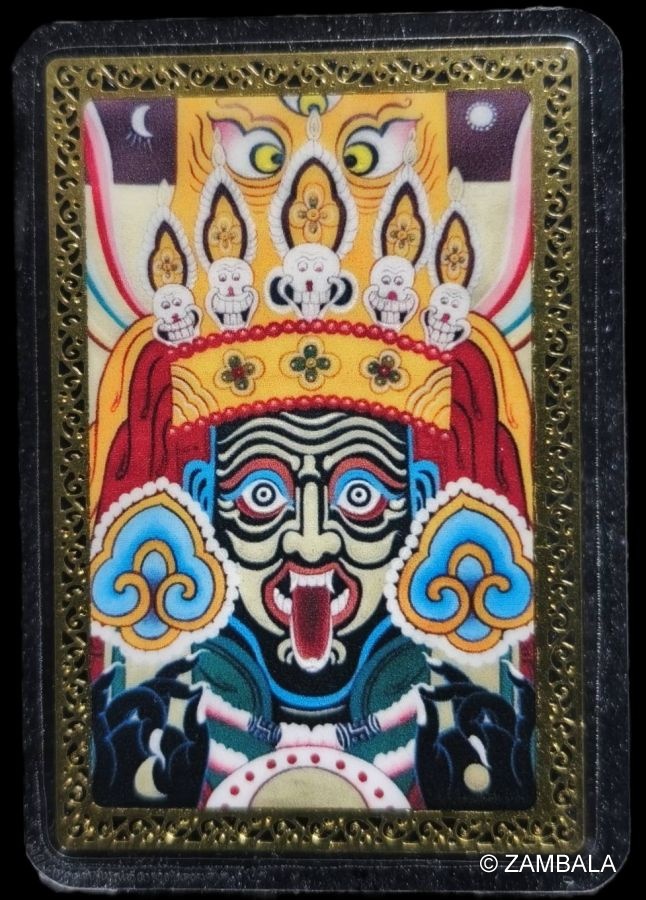
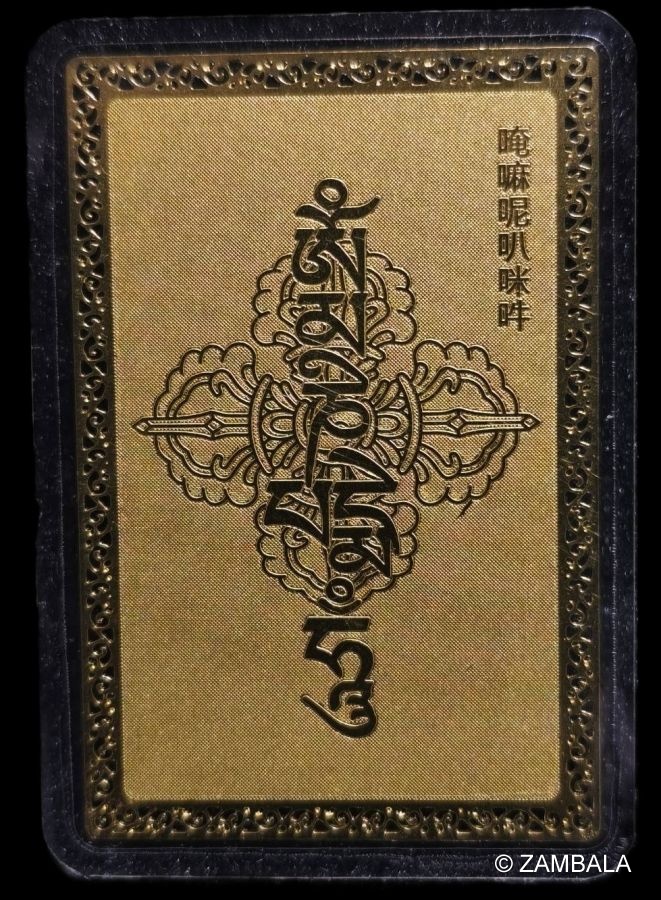
| Protection Mandala Sticker |
|
|
|
|
|
Sku#:0535-3
|
|
《In order to view the wholesale price .
Please Apply to be a wholesalers》
|
|
|
|
|
 |
|
Please contact us to verify availability. 1-626-354-6228
Email: zambalallc@gmail.com
America area customers can view on this website first.
https://FlyingMystics.org/ |
|
|
|
|
|
|
Material: Gold-plated, Buddha image, hard alloy, protective film
Size: 4.5 x 6.8 cm
Description: Zhaqi Lhamo Wealth God Buddha Image (Tibetan Buddhist Guardian Deity "Zhaqi Lhamo")
Zhaqi Lhamo (Tibetan: མགོན་པོ་ལེགས་ལྡན་ནག་པོ་ or simply Zhaqi Lhamo, also transliterated as "Auspicious Mother," "Zhaqi Lhamo," or "Auspicious Wealth God") is a very important wealth protector deity worshipped in Nyingma and some Gelugpa monasteries of Tibetan Buddhism. She is considered one of the "Five Directional Wealth Gods" (a special wealth deity besides the Yellow, Red, White, Black, and Green Jambhala), and has become extremely popular in Tibet and Han Chinese areas in recent years. She is especially revered as the principal deity at the Zhaqi Temple in Lhasa, hence the name "Zhaqi Wealth God" or "Lhasa Wealth God."
Origin and Legends
- The most widely circulated version: Zhaqi Lhamo was originally an extremely beautiful woman from Tibet (some say she was a maidservant to Princess Wencheng). She vowed to marry Padmasambhava, the wisest man in Tibet at the time. To guide her, Padmasambhava subdued her and made her a protector, giving her the name "Lakshmi" (an emanation of Palden Lhamo), which later evolved into "Zhaqi Lhamo," the deity specifically in charge of wealth.
- Another version: She was originally an emanation of Lakshmi in Hinduism, but was later taken in by Padmasambhava and became a protector of Buddhism, specifically protecting the wealth, career, and merit of practitioners in the degenerate age.
The most widely circulated story is that she was a beautiful concubine during the Qing Dynasty. Because of her stunning beauty, she was envied and poisoned, resulting in her face turning black and her tongue protruding. Her spirit lingered in the palace for a long time. Later, she was guided back to Tibet by a high-ranking Tibetan monk and settled there.
- In the Zhaqi Temple (built in the 15th century) in Mozhugongka County, Lhasa, she is the temple's sole principal deity, which is extremely rare in Tibet (most temples feature Buddhas and Bodhisattvas as their principal deities), demonstrating her high status.
Characteristic Features
- Usually has a red or green body (red is most common), a dark face, a protruding tongue, and feet shaped like chicken feet.
- One face and two arms.
Hands are branded with sun and moon symbols. A breastplate is worn on the chest.
- Wears a five-skull crown, adorned with human bone necklaces, and has a wrathful expression with a smile.
- Most notably, she loves to drink alcohol (especially baijiu), so alcohol must be offered when making offerings.
Orthodox Offerings and Usage (Tibetan Buddhist Ritual)
1. Bring a Buddha card or image home.
- It is best to have it blessed and consecrated by a qualified master; otherwise, its efficacy will be greatly reduced.
- Buddha cards are usually small printed versions of thangkas or small copper thangkas.
2. Placement
- Place in the wealth corner, on the altar, or near your wallet, purse, cash register, or in the office.
- Ideally, the height should be above waist level; do not place it on the ground or in the bedroom.
- Avoid placing it opposite the toilet or directly facing the main entrance.
3. Core Offering – "Offering Wine"
- Zhaqi Lhamo loves to drink white wine (high-proof is best; Tibetans often use barley wine).
- Offer a small cup of white wine daily or on a fixed day each week (ideally the 8th, 15th, or 30th of the Tibetan calendar).
- Use a special small wine cup when offering wine, filling it to overflowing (symbolizing overflowing wealth).
- The day after the offering, sprinkle the wine at a crossroads or pour it out (called "sending off the God of Wealth"), then replace it with fresh wine.
- If it's inconvenient to offer wine daily, at least once a week, or always on the 1st and 15th of each Tibetan calendar month.
4. Other Offerings
- Fresh flowers, butter lamps, milk, yogurt, candy, and desserts.
- Especially favor "five-colored threads" or red ropes (symbolizing the swift flow of wealth).
5. Mantra Recitation
- Heart Mantra: Om Zamki Mahākāla Hum Phat Svāhā (most common)
- Or longer mantra: Om Beja Guru Vajra Zhaqilam Hum Hum Hum Phat Svāhā
Impact on Buddhist Culture (especially whether it's a blessing or a curse?)
Positive Impacts:
- Many Han Chinese believers were introduced to Tibetan Buddhism for the first time through "seeking wealth," leading them to learn Buddhism, release animals, recite mantras, and make offerings to monks, indirectly accumulating merit.
- Lhasa's Zhaqi Monastery became the most popular pilgrimage site in Tibet, attracting a constant stream of visitors daily, boosting the local economy and cultural preservation.
- The "God of Wealth" belief became widely accepted in Han Chinese Tibetan Buddhism, ranking alongside the Yellow Jambhala as one of the two most popular Gods of Wealth.
Controversy and Negative Impacts:
- Many people treat Zhaqi Lhamo as a "money-making machine," making excessively utilitarian offerings (seeking only wealth without cultivating the mind), which contradicts the Buddhist principle of "detachment from greed."
- This has led to a proliferation of commercialized, low-quality Buddhist amulets and fake gurus offering consecrations; some even sell "already-offered wine" as sacred objects.
- Some high-ranking Tibetan Buddhist monks (such as Khenpo Sodargye) have publicly warned that Zhaqi Lhamo is a wrathful protector; if one's heart is not pure and one only seeks wealth, it will bring financial loss or unexpected misfortunes.
- Some people have indeed become wealthy quickly after making offerings, while others have suffered financial losses and legal troubles due to excessive greed, considered a "test by the Dharma protector."
Summary and Recommendations: Zhaqi Lhamo is indeed a wealth protector recognized by orthodox Tibetan Buddhism, but offerings must be made with a "true faith":
"First, make offerings to the Three Jewels, release animals, and perform acts of charity, then ask Zhaqi Lhamo to bless your legitimate wealth." This aligns with the Buddhist spirit and is less likely to attract negative side effects.
Many people have personally experienced that when you are no longer so attached to money, but simply treat her like a "family member," offering her a cup of wine and chatting with her daily, your wealth naturally flows in. This is precisely the mindset that the Dharma protector prefers.
|
|
|
 |
|
|
|
|
|
|
|
|
|
|
|
|
|
|
|
|
© 2026 Zambala inc. All Rights Reserved. No part of this site may be reproduced without our written Permission.
Service Mail: ZambalaLLC@gmail.com
Phone: (626) 289-9787 or 1(888)Zambala (926-2252)
Fax: (626) 289-9719
1904 West Valley Blvd. Alahambra, CA 91803 USA
Unless stated otherwise in content's license. Design By
|
|
|