|
|
|
Wholesalers: |

|
/ |
|
|
|
|
|
|
|
|
| "The good man brings good things out of the good stored up in his heart, and the evil man brings evil things out of the evil stored up in his heart. For out of the overflow of his heart his mouth speaks." Jesus Christ |
|
|
|
|
|
|
|
|
|
|
|
|
|
|
|
|
|
|
|
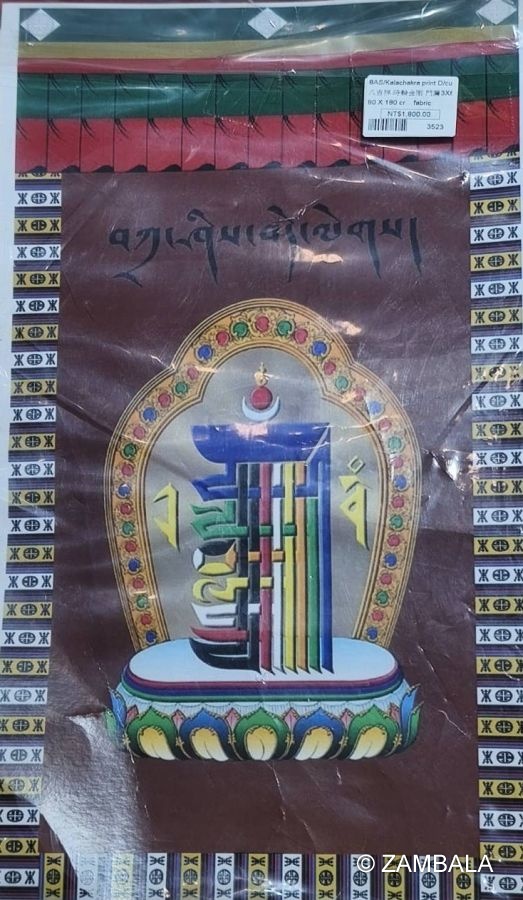
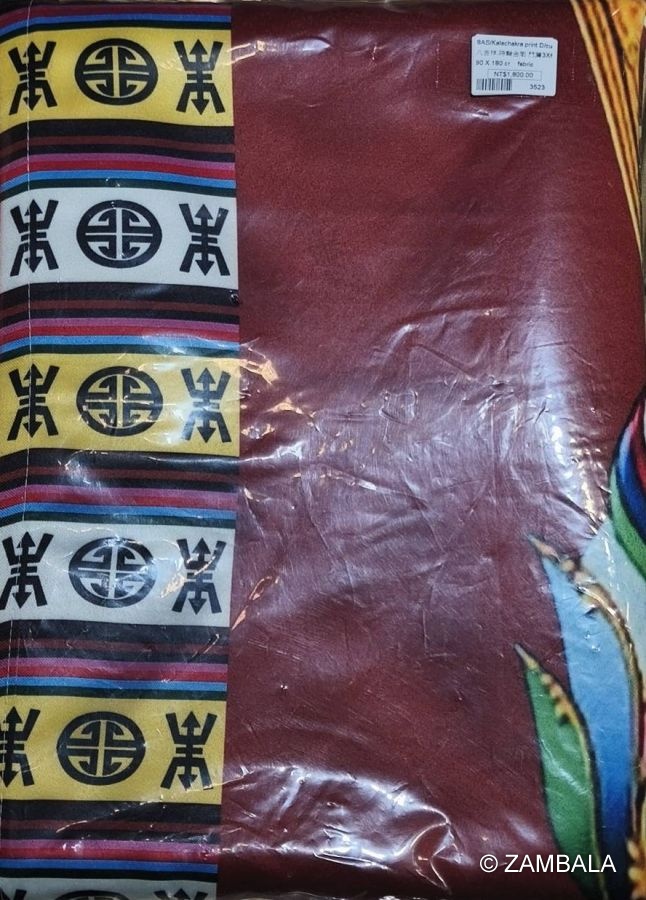
| 8AS/Kalachakra print D/curtain |
|
|
|
|
|
Sku#:3523
|
|
《In order to view the wholesale price .
Please Apply to be a wholesalers》
|
|
|
|
|
 |
|
Please contact us to verify availability. 1-626-354-6228
Email: zambalallc@gmail.com
America area customers can view on this website first.
https://FlyingMystics.org/ |
|
|
|
|
|
|
Material: Fabric, Printed, Kalachakra Pattern
Size: 90 x 180 cm
Description: 1. What is a Kalachakra Curtain?
A Kalachakra Curtain (Tibetan: "Kalachakra Guru Guru," or simply Kalachakra Curtain) is a special fabric curtain used in Tibetan Buddhism (especially the Gelug, Sakya, and Nyingma schools) to hang at the entrance of tantric initiation ceremonies, Kalachakra mandala halls, or the doors of meditation retreat rooms during the practice of the Kalachakra Tantra.
The curtain is usually dark blue or black with a complete "Kalachakra Ten-Syllable Mantra" (also known as the "Ten-Syllable Mantra" or "Kalachakra Seed Syllable Stacking") embroidered in the center. It is surrounded by tantric symbols such as the vajra, bell, lotus, flame, and the Eight Auspicious Symbols, and is bordered with Tibetan brocade. This ten-symbol mantra is the core symbol of Kalachakra, representing the generation and cessation of all things in the universe, and is considered the "heart essence" of the Kalachakra deity.
2. Usage and Rules
- **Hanging Place**: It must be hung at the entrance to the Kalachakra mandala or initiation ceremony, and the lower edge of the curtain must not touch the ground (usually 10-20 cm off the ground), symbolizing "preventing worldly defilement from touching the esoteric teachings."
- **No Crossing**: Those who have received advanced Kalachakra initiations (especially the higher secret initiations and the most secret initiations) are forbidden from crossing under this curtain for life; they can only walk around it from the sides or lift the side to enter. This is an extremely strict samaya vow.
- **General Followers**: Those who have not received advanced initiations can pass under it normally, but must still maintain reverence, usually reciting the Kalachakra mantra or the ten-symbol mantra. - **During Retreat:** When a practitioner enters the Kalachakra retreat room, the curtain will be fully drawn, signifying "seclusion from the world," and outside interference is forbidden.
- **Fire Offering Ceremony:** During large-scale Kalachakra fire offering ceremonies, a small Kalachakra curtain is hung at the entrance to the fire offering furnace; those who have received initiation are also not allowed to pass through it.
3. Origin and History: The Kalachakra teachings were introduced to Tibet from India around 1027 AD. It is said that Shakyamuni Buddha simultaneously taught two beings in Dhānyakaṭaka, South India: on one side, he taught the *Prajñāpāramitā Sūtra* in the human realm, and on the other side, in the holy land of South India, he taught the *Kalachakra Root Tantra* to the King of Shambhala and the Vajradharas. This teaching was later transmitted by Indian masters such as Maitreya and Naropa, and in the 11th century, it was formally introduced to Tibet by the Kashmir pandit Somanatha and the Tibetan translator Dromi Shakya Yeshe.
The custom of using a curtain at the entrance to the Kalachakra Tantra originated in the late Indian Tantric period (10th-12th centuries). At that time, in major monasteries such as Vikramaśīla and Odantapuri, practitioners of the Kalachakra Tantra would hang a black curtain embroidered with the ten auspicious symbols at the entrance of the mandala to distinguish between those who had received initiation and those who had not, and to protect the purity of the tantric teachings.
After its introduction to Tibet, especially after the great Gelugpa founder Tsongkhapa (1357-1419) vigorously promoted Kalachakra, the curtain became standard practice. Tsongkhapa himself drew the Kalachakra mandala design and stipulated the curtain system, which later became standard practice in all Tibetan Buddhist monasteries during Kalachakra initiations.
4. Profound Influence on Buddhist Culture
- **Symbolism of Tantric Vows:** The Kalachakra curtain is the most outward symbol of the "Fourteen Root Vows of Tantra" and the "Kalachakra-specific Vows" in Tibetan Buddhism. It transforms the abstract principle of "not revealing secret teachings to those who have not received initiation" into a concrete code of conduct, reinforcing the hierarchy and sacredness of Tantra.
- **Protective Function:** Tibetan Buddhism believes that the ten-symbol mantra possesses extremely strong blessings and protective power. The curtain itself is regarded as the "boundary" of the Kalachakra protectors, capable of preventing obstacles and demonic forces from intruding into the mandala.
- **Cultural Symbol:** Whenever people see a black curtain with the gold ten-symbol mantra, whether in the Jokhang Temple in Lhasa, Bodh Gaya in India, or in Mongolia, Bhutan, and Buryatia, they immediately know that a Kalachakra initiation is about to take place or is taking place, making it the most easily recognizable visual symbol for Tibetan Buddhists worldwide. **Modern Continuation:** Since the 1970s, the Dalai Lama has conducted dozens of large-scale Kalachakra initiations worldwide, and this curtain has always been present. Many Western disciples also hang small Kalachakra curtains at the entrance of their home shrines, making it an important symbol of the globalization of contemporary Tibetan Buddhism.
In summary, the Kalachakra curtain is more than just a piece of cloth; it is:
- The "identity card" of the Kalachakra tradition's millennia-long lineage
- The "materialization" of Vajrayana precepts
- The "entrance barrier" of the cosmic mandala
- A "gateway symbol" between Shambhala and the present world
It remains one of the most symbolic, rigorous, and sacred ritual objects in Tibetan Buddhism.
|
|
|
 |
|
|
|
|
|
|
|
|
|
|
|
|
|
|
|
|
© 2025 Zambala inc. All Rights Reserved. No part of this site may be reproduced without our written Permission.
Service Mail: ZambalaLLC@gmail.com
Phone: (626) 289-9787 or 1(888)Zambala (926-2252)
Fax: (626) 289-9719
1904 West Valley Blvd. Alahambra, CA 91803 USA
Unless stated otherwise in content's license. Design By
|
|
|