|
|
|
Wholesalers: |

|
/ |
|
|
|
|
|
|
|
|
| "You don't need to change the world; you need to change yourself."
~Don Miguel Ruiz |
|
|
|
|
|
|
|
|
|
|
|
|
|
|
|
|
|
|
|
|
|
|
|
|
Sku#:0369-1
|
|
《In order to view the wholesale price .
Please Apply to be a wholesalers》
|
|
|
|
|
 |
|
Please contact us to verify availability. 1-626-354-6228
Email: zambalallc@gmail.com
America area customers can view on this website first.
https://FlyingMystics.org/ |
|
|
|
|
|
|
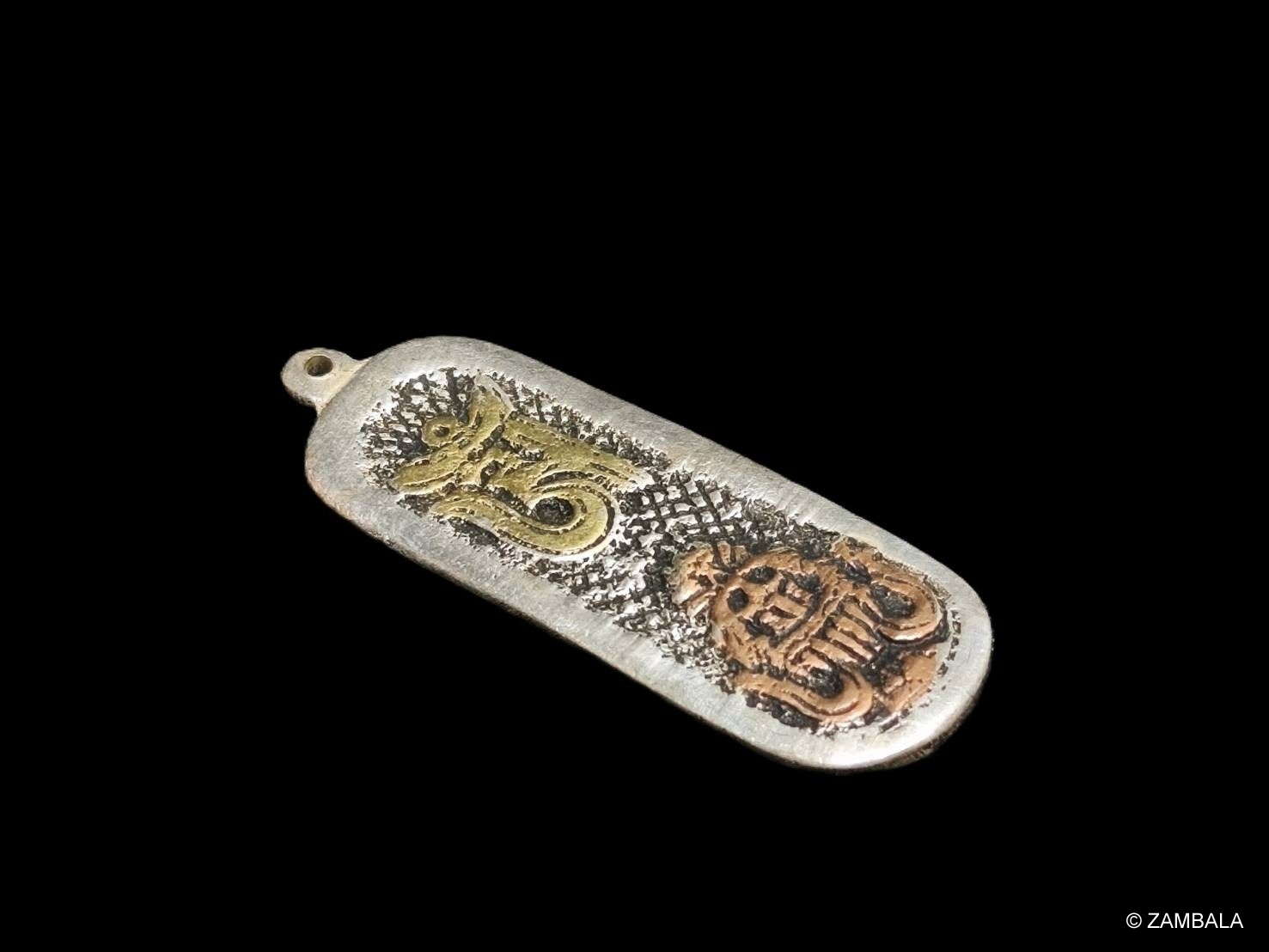
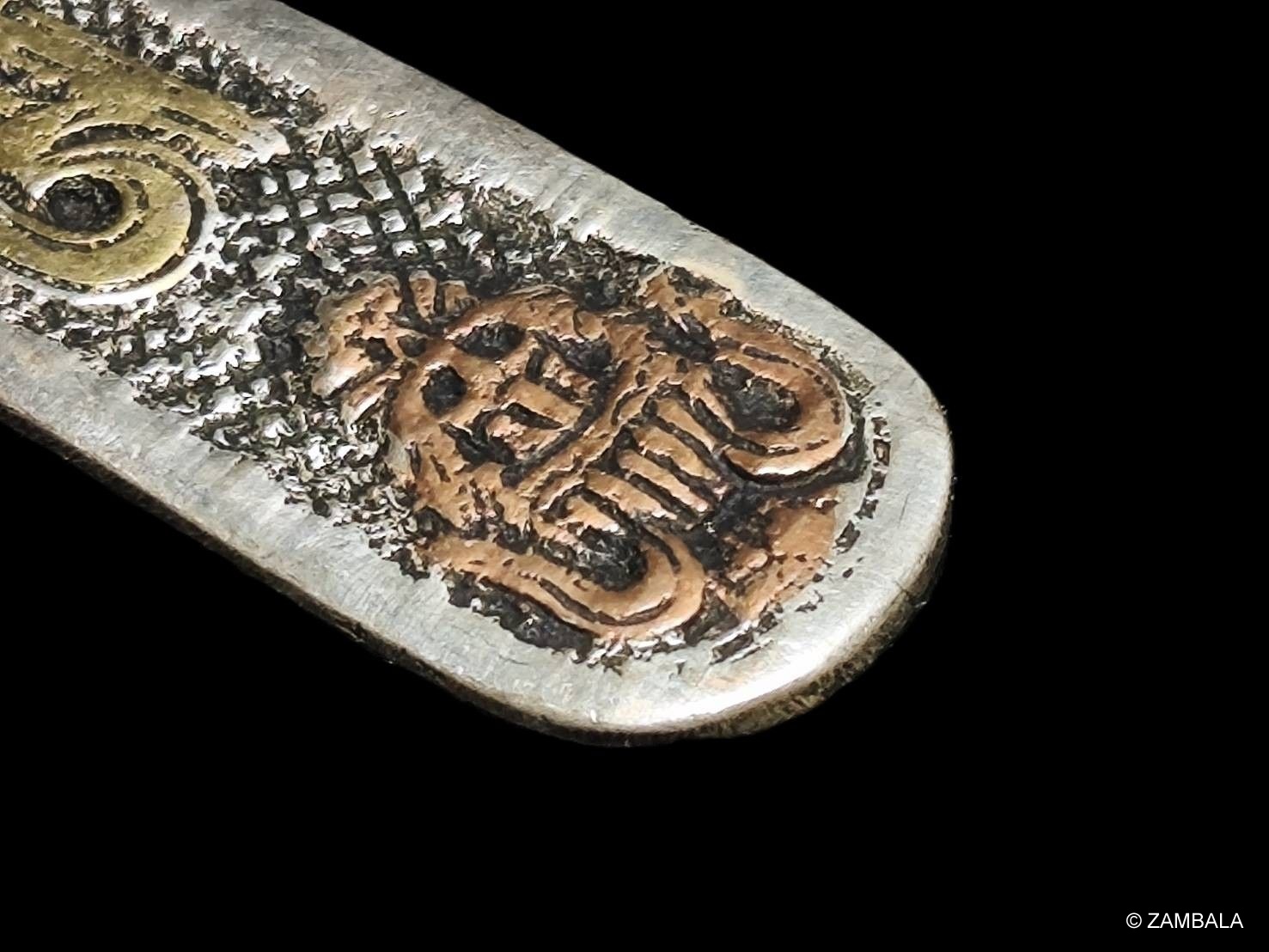
Material: Stainless steel, die-cast, cast (Seed Syllable Pendant)
Size: 50 x 18 mm
Description: The Origin and Influence of Amulets in Buddhism
In Chinese contexts, when we say "amulet," we usually refer to blessed sacred objects commonly found in Buddhism (especially Mahayana Buddhism, particularly Tibetan and Han Buddhism). Common forms include:
- Small Gau (Tibetan)
- Homa amulets, peace amulets, Buddha pendants, Medicine Buddha prayer beads, relic pouches
- Small triangular pouches folded from paper with scriptures or mantras written on it (common in Han areas)
- Buddha cards, seed syllable amulets, etc., blessed by high-ranking monks
The following explains its origin and profound influence on Buddhism in stages:
I. Origin and Scriptural Basis
The concept of amulets can be traced back to early Buddhism and sectarian Buddhism, but its widespread popularity truly began after the rise of Mahayana Buddhism.
1. **Early Buddhism (Buddha's Time)**
In the Pali Canon, the Buddha permitted monks to wear relics such as "sarira" (relics) or "Buddha's hair and teeth" as protective offerings (Dīgha Nikāya, Mahaparinirvana Sutta).
The earliest "amulet" was actually the Buddha's relics, hair, and teeth; believers believed these relics could bring protection.
2. **Mahayana Buddhism's "Dharani Mantras" and "Homa" Culture (c. 1st-4th centuries AD)**
Mahayana scriptures contain numerous "dharanis" (mantras, secret phrases), claiming that reciting or wearing these mantras could receive direct protection from Buddhas and Bodhisattvas. Important classic texts include:
- *The Dharani Sutra for Protecting Children Spoken by the Buddha*
- *The Great Compassion Dharani Sutra of the Thousand-Armed and Thousand-Eyed Avalokiteshvara Bodhisattva* (Great Compassion Mantra)
- *The Avatamsaka Sutra, Chapter on the Vows and Practices of Samantabhadra* mentions using the names of Buddhas and Bodhisattvas for protection.
- *The Sutra of the Fundamental Vows and Merits of the Medicine Buddha*: The Medicine Buddha's twelve great vows specifically mention "eliminating disasters and suffering," therefore, Medicine Buddha-related amulets are the most common.
3. **The Decisive Development of Esoteric Buddhism (Vajrayana) (from the 7th-8th centuries AD)**
The amulet truly evolved into the "small cloth bag, metal box, paper talisman" form we see today during the late Indian Esoteric Buddhism and Tibetan Buddhism period.
Esoteric Buddhism believes that highly accomplished masters place mandalas, seed syllables, mantras, relics, sacred medicines, and blessed rice grains into a small gau box, and then bless it with mantras recited millions of times, thus enabling the wearer to receive the "constant protection" of Buddhas and Bodhisattvas. When Padmasambhava traveled to Tibet to spread Buddhism, he widely produced these amulets (called srung-wa or ཟས་ in Tibetan) to subdue evil spirits and protect his disciples. This became a very common tradition in Tibetan Buddhism.
II. Forms of Amulets in Various Buddhist Traditions
| Buddhist Traditions | Common Amulet Names | Main Contents or Forms | Representing Buddhas and Bodhisattvas |
|--------------|--------------------------------|------------------------------------------|--------------------|
| Han Chinese Buddhism | Peace Amulets, Protective Amulets, Sachets | Cinnabar Amulets, Mantra Paper, Medicine Buddha Image, Avalokiteshvara Mantra | Medicine Buddha, Avalokiteshvara, Amitabha Buddha |
| Tibetan Buddhism | Gau (Small Gau), Protective Wheel | Mandala, Relics, Seed Syllables, Blessed Pills, Guru Hair | Padmasambhava, Tara, Amitayus Buddha |
| Southeast Asian Theravada Buddhism | Amulets (Thai: "Buddha Amulet") | Buddha Image Molded, Mixed with Relic Powder, Scripture Powder, Flower Pollen | Shakyamuni Buddha, Four-Faced Buddha |
| Japanese Shingon Buddhism | Omamori, Omomari, Mandala Amulets | Scriptures, Seed Syllables, Vajradhatu or Garbhadhatu Mandala | Vairocana Buddha, Acala |
III. The Profound Influence of Amulets on Buddhism
1. **Transforming Buddhism from a "Temple Religion" to a "Folk Religion"**
Amulets are small, portable, and affordable, allowing ordinary people, even those who are illiterate or do not visit temples, to carry the blessings of Buddhism with them. This is one of the most crucial mediums through which Buddhism has penetrated deeply into the lives of ordinary people in Asia.
2. **Strengthening the Belief in "Attaining Buddhahood in This Lifetime" and "The Constant Protection of Buddhas and Bodhisattvas"**
Vajrayana Buddhism emphasizes that "this body is the Buddha body," and amulets become a symbol that "Buddhas and Bodhisattvas reside in your heart," bridging the gap between ordinary people and the Buddha.
3. **Becoming an Important Pillar for Dharma Propagation and the Economy**
Many large temples (such as Luang Phor Thuat in Thailand, some temples in Myanmar, Sera Monastery in Tibet, and Mount Putuo in China) rely on the production of consecrated amulets to raise funds for Dharma propagation, and this remains a major source of income for many temples.
4. **The Emergence of the "Blessing Economy" and Controversy**
Because amulets are believed to be more valuable the more "efficacious" they are, excessive commercialization, fake blessings by high-ranking monks, and exorbitant prices have emerged in some areas. This has led the Buddhist community to constantly reflect on the line between "blessed objects" and "commodification."
In summary, the origins of amulets, from the relic worship of the Buddha's time → the Dharani belief of Mahayana Buddhism → the system of blessed sacred objects in Esoteric Buddhism, have evolved over 1,500 years to become the most widespread folk practice of Buddhism across East Asia, Southeast Asia, and South Asia today. Its greatest significance lies in:
"Condensing Buddhist teachings from scriptures and temples into a small belief that can be worn around the neck," allowing hundreds of millions of Buddhists to feel the protection of Buddhas and Bodhisattvas in their daily lives.
This is why even in modern society, Thai amulets, Tibetan gau, Japanese shrine amulets (though Shinto, they are deeply influenced by Buddhism), and Taiwanese mothers' lucky charms for their children are still so popular—because they embody humanity's most primal prayer: the hope of being protected by unseen forces of goodness.
|
|
|
 |
|
|
|
|
|
|
|
|
|
|
|
|
|
|
|
|
© 2026 Zambala inc. All Rights Reserved. No part of this site may be reproduced without our written Permission.
Service Mail: ZambalaLLC@gmail.com
Phone: (626) 289-9787 or 1(888)Zambala (926-2252)
Fax: (626) 289-9719
1904 West Valley Blvd. Alahambra, CA 91803 USA
Unless stated otherwise in content's license. Design By
|
|
|